HardwareGraphics CardsFSR 3.1 vs DLSS showdown: How does AMD’s latest upscaler version compare to Nvidia’s finest for performance and image quality?When you purchase through links on our site, we may earn an affiliate commission.Here’s how it works.
HardwareGraphics CardsFSR 3.1 vs DLSS showdown: How does AMD’s latest upscaler version compare to Nvidia’s finest for performance and image quality?When you purchase through links on our site, we may earn an affiliate commission.Here’s how it works.
When you purchase through links on our site, we may earn an affiliate commission.Here’s how it works.
(Image credit: Guerilla, Insomniac Games)
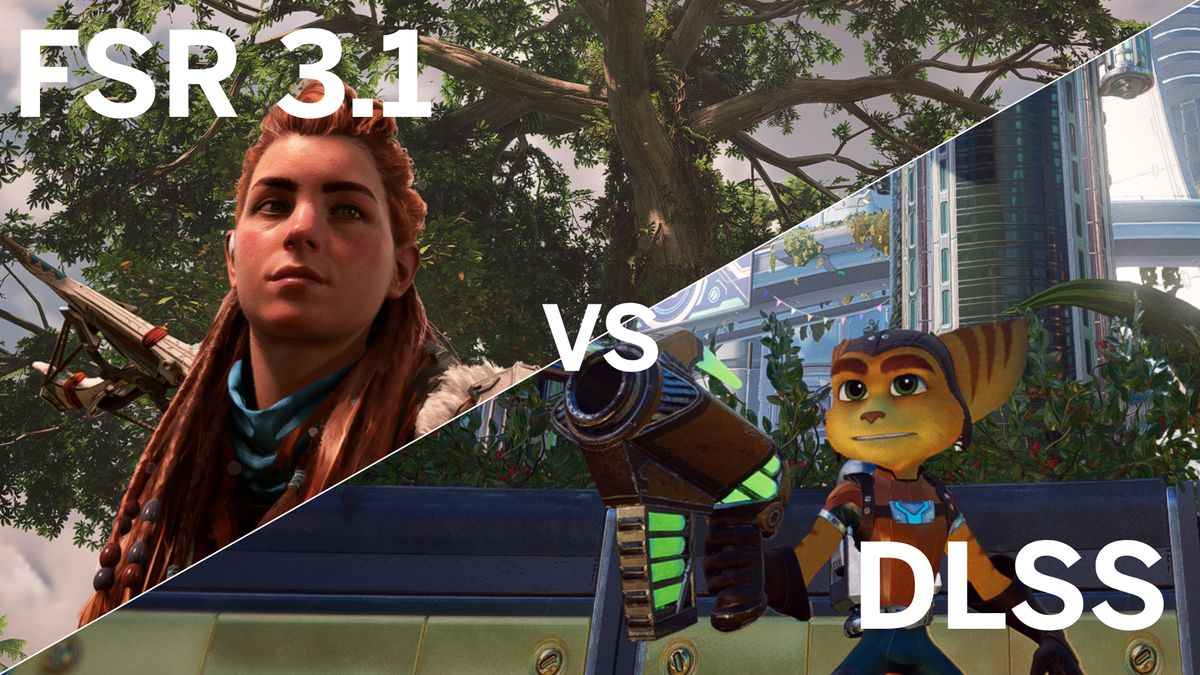
When it comes to upscalers, there’s little doubt that Nvidia’s DLSS has become the go-to choice when compared to its nearest rivals—AMD’s FSR and Intel’s XeSS. Image quality comparisons have repeatedly shown that Nvidia’s upscaling solution simply preserves detail better than the others, with less flickering, shimmering and graining—and often better performance to boot.
However,AMD has recently released FSR 3.1, a supposedly much improved version of its own upscaling tech. Unlike DLSS (and like previous versions of FSR) this latest release is still graphics card agnostic thanks to its compute-based approach to upscaling.
While FSR 3 added its own version of Frame Generation, the fundamental upscaling tech remained the same as 2.2, putting it on the backfoot compared to Nvidia. However, the release notes for FSR 3.1 promise much better temporal stability, less ghosting, and improved upscaling quality overall. Bold claims—and worth a spot of testing, we thought.
So, time for a head to head then. Can FSR’s latest release bring it near to—or even surpass—DLSS and its excellent upscaling chops, and what does image quality look like in comparison? And which, crucially, is best for performance?
I’ve equipped my machine with anRTX 4070to find out. Let’s kick things off withHorizon Forbidden West. A graphically beautiful game, for sure, and one that’s filled with lots of small flying insects, running water, and flowing hair. All things that traditionally give upscalers trouble. In fact, Horizon FW gives me a bit of a gift here: the very first opening section of the game puts you in a small area filled with all of the above.
Very kind of it, I think you’ll agree.
PC Gamer - Horizon Forbidden West - 1440p Quality Setting - FSR 3.1 and DLSS 3.5 Comparison - YouTubeWatch On
PC Gamer - Horizon Forbidden West - 1440p Quality Setting - FSR 3.1 and DLSS 3.5 Comparison - YouTube
PC Gamer - Horizon Forbidden West - 1440p Quality Setting - FSR 3.1 and DLSS 3.5 Comparison - YouTube
SPONSOREDZotac Gaming GeForce RTX 4070 Twin Edge OC:You don’t need a massive GPU to deliver incredible graphics. This small form factor–ready graphics card features 5888 CUDA Cores for gaming and 184 Tensor Cores for AI Processing (and a little upscaling). It pushes a lot of power while keeping frosty with active fan control and IceStorm 2.0 cooling. Keep your gaming fluid while keeping your PC’s footprint small.View Deal
SPONSOREDZotac Gaming GeForce RTX 4070 Twin Edge OC:You don’t need a massive GPU to deliver incredible graphics. This small form factor–ready graphics card features 5888 CUDA Cores for gaming and 184 Tensor Cores for AI Processing (and a little upscaling). It pushes a lot of power while keeping frosty with active fan control and IceStorm 2.0 cooling. Keep your gaming fluid while keeping your PC’s footprint small.View Deal
SPONSOREDZotac Gaming GeForce RTX 4070 Twin Edge OC:You don’t need a massive GPU to deliver incredible graphics. This small form factor–ready graphics card features 5888 CUDA Cores for gaming and 184 Tensor Cores for AI Processing (and a little upscaling). It pushes a lot of power while keeping frosty with active fan control and IceStorm 2.0 cooling. Keep your gaming fluid while keeping your PC’s footprint small.View Deal
SPONSOREDZotac Gaming GeForce RTX 4070 Twin Edge OC:You don’t need a massive GPU to deliver incredible graphics. This small form factor–ready graphics card features 5888 CUDA Cores for gaming and 184 Tensor Cores for AI Processing (and a little upscaling). It pushes a lot of power while keeping frosty with active fan control and IceStorm 2.0 cooling. Keep your gaming fluid while keeping your PC’s footprint small.
SPONSOREDZotac Gaming GeForce RTX 4070 Twin Edge OC:You don’t need a massive GPU to deliver incredible graphics. This small form factor–ready graphics card features 5888 CUDA Cores for gaming and 184 Tensor Cores for AI Processing (and a little upscaling). It pushes a lot of power while keeping frosty with active fan control and IceStorm 2.0 cooling. Keep your gaming fluid while keeping your PC’s footprint small.
SPONSORED
SPONSORED
SPONSORED
Zotac Gaming GeForce RTX 4070 Twin Edge OC:You don’t need a massive GPU to deliver incredible graphics. This small form factor–ready graphics card features 5888 CUDA Cores for gaming and 184 Tensor Cores for AI Processing (and a little upscaling). It pushes a lot of power while keeping frosty with active fan control and IceStorm 2.0 cooling. Keep your gaming fluid while keeping your PC’s footprint small.
View Deal
View Deal
View Deal
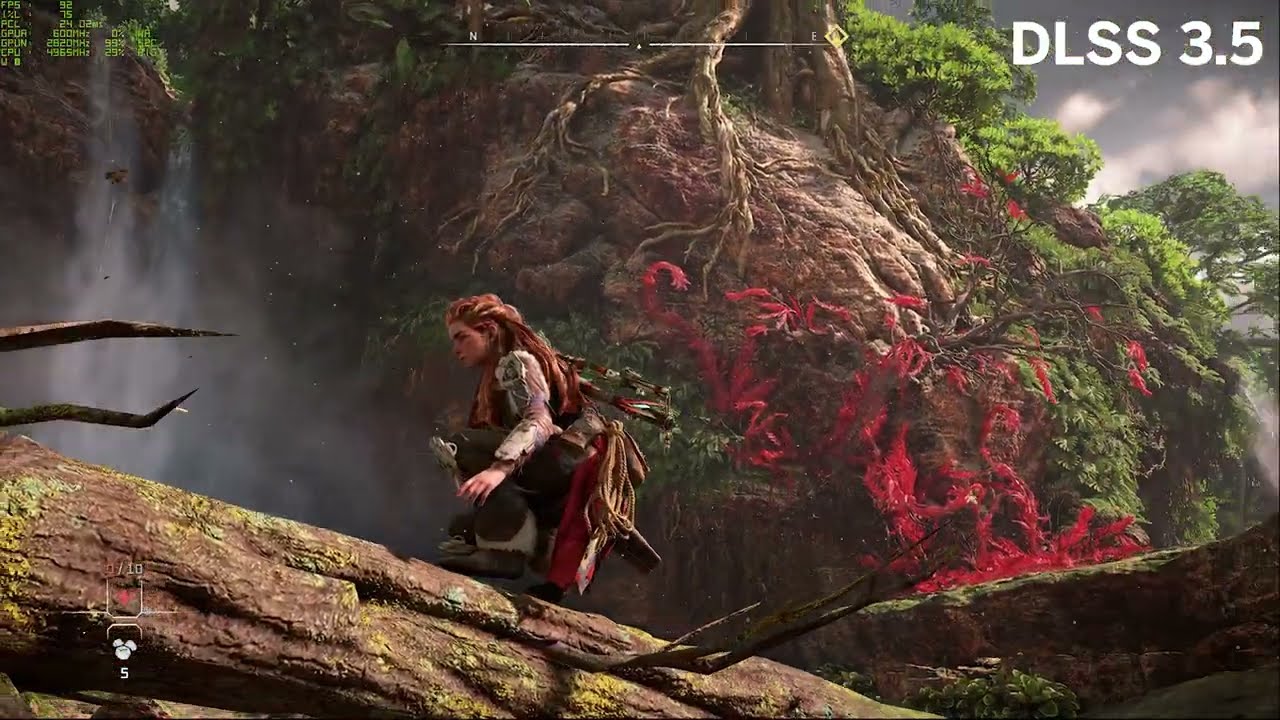
As such, I placed Aloy on an appropriate log to capture some of the fast moving beasties, before running a few laps to see how both upscalers handle some motion. The above footage shows the game running at maximum settings at 1440p with FSR 3.1 and DLSS 3.5 set to Quality, with motion blur off.
Pay close attention, however, to the side of Aloy’s face when I rotate the camera in the flower patchat around 0:41. While both upscalers show a little blurring, FSR 3.1 is still noticeably worse, with a longer trail of blur under slow, consistent movement.
Something I’m particularly used to seeing with FSR is a noticeably grainy or “fizzy” effect surrounding objects in motion compared to DLSS. While this also appears to be improved, it’s still noticeableat 1.02 when Aloy jumps in front of the water. Silhouetted against the fast moving stream, there’s noticeable distortion and graining around her frame under movement, an effect that’smuch less pronounced with DLSS enabled.
Still, YouTube compression being what it is, perhaps we should take a look at some still frames for a dive into the details. Below are screenshots taken using FSR 3.1 and DLSS 3.5, also at 1440p quality settings. Both upscalers do a pretty good job here, although I managed to capture part of Aloy’s idle animation where her head was turning to get two comparable motion screenshots (no easy feat, let me tell you).
While FSR 3.1 performs admirably, and I appreciate it can be difficult to see on a small screenshot, there is noticeably less blurring on the side of her head in the DLSS version. DLSS also looks to do a slightly better job on some of the static background details, although it’s much of a muchness for the most part. At 1440p at least, FSR 3.1 does a comparable job, although there are tell-tale signs that it’s still struggling with details and graining compared to Nvidia’s solution.
Drop things down to 1080p performance settings on both upscalers and zoom in a bit, however, and well…I’ll let you decide.
Eesh. While I appreciate Aloy’s head doesn’t line up perfectly from shot to shot (you really don’t know the fun I had putting these together), it’s pretty clear where FSR 3.1 is failing here, and DLSS is succeeding. Motion is a difficult thing to capture in a screenshot, but believe me when I say that Aloy’s head is moving in both frames, and that DLSS does such a better job at performance settings, it’s not even close.
When it comes to performance itself, FSR 3.1 actually puts on a decent showing—compared to DLSS 3.5, at least. While the figures here are within margins of error, I performed multiple runs to check my results and found that, on average, FSR 3.1 usually manages to eek a couple of frames ahead.
That’s a pretty impressive result—although as my image comparisons show above, some visual sacrifices have been made. It’s nice to know that, if performance is your concern, AMD’s upscaler can deliver comparable, even slightly better results than Nvidia’s—at least in this game.
There’s always Frame Generation to consider too, both Nvidia and AMD flavors, although I kept it off for all the comparisons here for the sake of a raw performance comparison.
Which means we’d better move on.Ratchet & Clank: Rift Apartalso features both FSR 3.1 and DLSS, although this time it’s the latest revision, DLSS 3.7. It’s got some fluffy, fuzzy characters amidst jam-packed set design, and even some ray tracing shenanigans to give both upscalers a real workout.
So, I whacked the settings up to maximum at 1440p, including ray tracing, and set to work Ratcheting and Clanking—or whatever it is you do in this game.
PC Gamer - Ratchet & Clank: Rift Apart - 1440p Quality Setting - FSR 3.1 vs DLSS 3.7 comparison - YouTubeWatch On
PC Gamer - Ratchet & Clank: Rift Apart - 1440p Quality Setting - FSR 3.1 vs DLSS 3.7 comparison - YouTube
PC Gamer - Ratchet & Clank: Rift Apart - 1440p Quality Setting - FSR 3.1 vs DLSS 3.7 comparison - YouTube
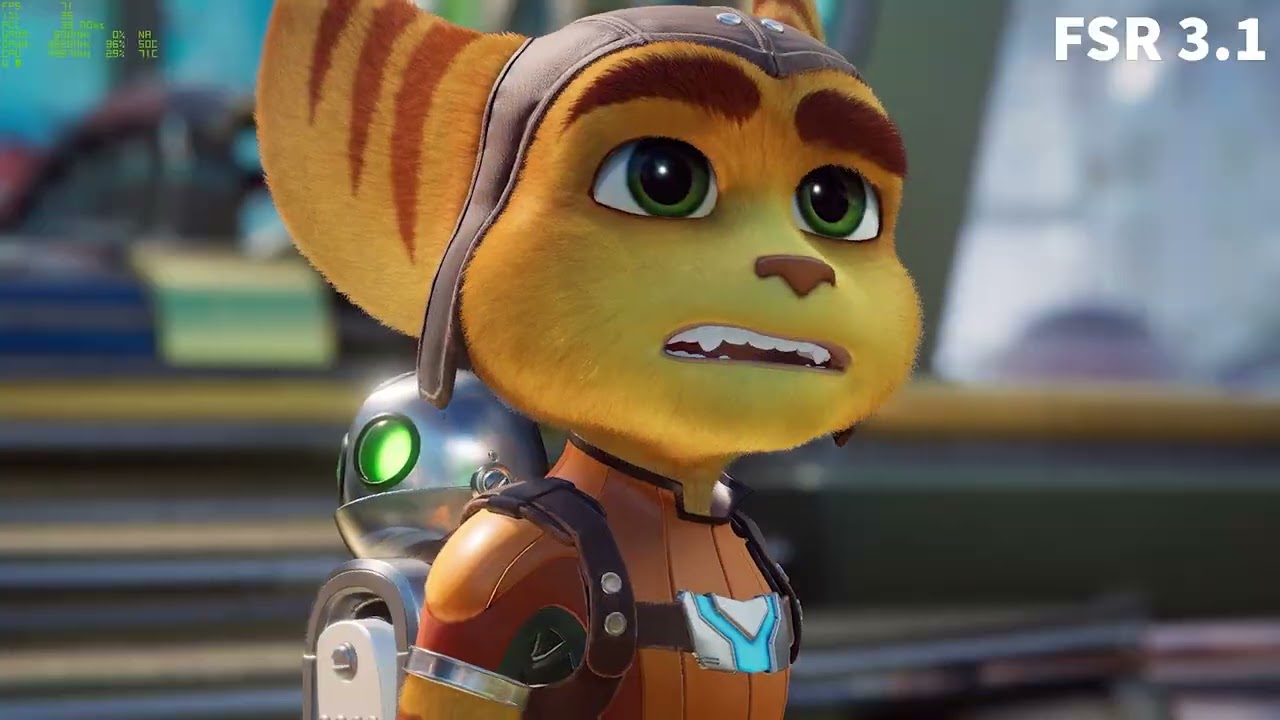
Again, FSR does well at these settings. Still, that graining effect is perceptible under motion, and points where I turn the character to face the camera show that Ratchet’s furry ears aresusceptible to a pixelated effect against the backgroundthat’s much improved with DLSS. Nvidia’s solution seems to be better at accurately smoothing crunchy edges with detailed scenes behind them, and switching back and forth between the two reveals asmoother, more pleasant-looking imagein the DLSS version.
Ghosting, however, does appear to be less of an issue for FSR than it used to be. There’s lots of floating ticker tape, fast moving whizz-bang effects, and smashy, crashy particles in this scene, and I didn’t notice too much of a trailing or ghosting effect. Still, for image quality overall? DLSS produces smoother-looking frames, with less artifacting.
It’s the same story again: both are perfectly usable, both produce an image quality that, if you’re not paying too much attention to the details, would absolutely deliver a good experience for your average player. That being said, it’s still obvious that DLSS is producing better images in detail-packed scenes at 1440p, both under motion and standing still.
It’s muddy, pixelated, and simply looks like a different set of textures entirely.
Fast motion at these settings was simply unpleasant to watch. In fact, things were so bad using FSR in performance mode at this resolution that I recorded an extra video showing the effect:
PC Gamer - Ratchet & Clank: Rift Apart - FSR 3.1 1080p Performance Setting - YouTubeWatch On
PC Gamer - Ratchet & Clank: Rift Apart - FSR 3.1 1080p Performance Setting - YouTube
PC Gamer - Ratchet & Clank: Rift Apart - FSR 3.1 1080p Performance Setting - YouTube
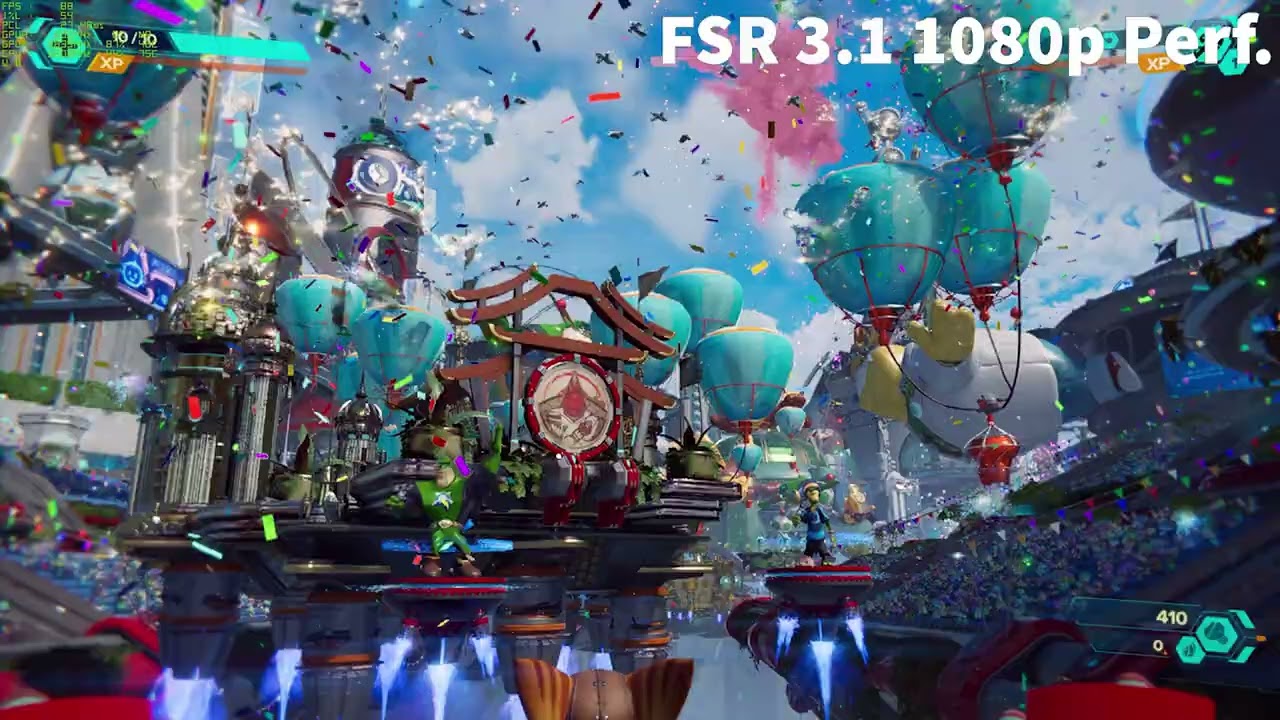
Yep, even video compression can’t hide the flaws of that one. Fizzy, grainy, and so distracting that I felt myself grimacing as I played. If your system needs 1080p performance settings to get a good frame rate out of this game, I simply would rather not play it in this state than use FSR performance mode. DLSS doesn’t look wonderful either at these settings, but the image is much smoother, and simply less distracting to look at.
And then we come to performance. At 1440p quality, FSR on average produced an identical result. The 1440p balanced and 1080p performance figures, however, reveal a different story. Here, DLSS pulls comfortably ahead, all while delivering an image quality that’s simply much nicer to look at.
So, what have we learned? Well, while FSR 3.1 undoubtedly handles motion better than its predecessors, and delivers decent image quality at 1440p quality settings, compared to DLSS it’s still the worse of the two. No getting around it, I’m afraid—if you have an Nvidia card, there’s nothing to recommend using FSR over DLSS, other than perhaps a few frames in certain games.
For those of you on AMD or Intel hardware though, you will likely see an improvement over previous FSR versions in games that upgrade to the latest release. I’ve been experimenting with various iterations of AMD’s upscaler for a while now, and I can tell that improvements have been made.
…there’s still that nagging, teasing doubt that, if I was playing on an Nvidia card, my games would simply look a lot nicer using DLSS
…there’s still that nagging, teasing doubt that, if I was playing on an Nvidia card, my games would simply look a lot nicer using DLSS
But ultimately, AMD’s compute-based, hardware agnostic solution still loses out to Nvidia’s highly-refined, AI-based iteration.
Perhaps that should come as little surprise, but part of me was hoping—like many I’m sure—that this update would finally solve some of the graining, fizzing, and for want of a better term “FSR-like” artifacting that has plagued every version I’ve tested to date. And it simply hasn’t. Maybe I’m expecting too much from AMD’s solution given the difference in methodology here, but as with GPU performance overall, Nvidia still has AMD firmly on the backfoot.
As an AMD-card user, I’ll take some comfort in the fact thatgames using FSR 3.1will indeed look a bit better with AMD’s solution enabled than previous. But there’s still that nagging, teasing doubt that, if I was playing on an Nvidia card, my games would simply look a lot nicer using DLSS. And in some, I’d be getting significantly better performance, too.
Thems the facts. This round is over, and DLSS stands victorious. AMD might be improving, but even after putting up a brave fight with this latest FSR iteration, Nvidia remains the upscaling champ.
TOPICSNvidia
TOPICS
More about graphics cardsIs the new RTX 5070 really as fast as Nvidia’s previous flagship RTX 4090 GPU? Turns out the answer is yes. Kinda.It’s time for me to admit that AI-accelerated frame generation might actually be the way of the future and that’s a good thingLatestPiranha Games will lay off employees after Mechwarrior 5: Clans ‘performed below projections’See more latest►
More about graphics cardsIs the new RTX 5070 really as fast as Nvidia’s previous flagship RTX 4090 GPU? Turns out the answer is yes. Kinda.It’s time for me to admit that AI-accelerated frame generation might actually be the way of the future and that’s a good thingLatestPiranha Games will lay off employees after Mechwarrior 5: Clans ‘performed below projections’See more latest►
More about graphics cardsIs the new RTX 5070 really as fast as Nvidia’s previous flagship RTX 4090 GPU? Turns out the answer is yes. Kinda.It’s time for me to admit that AI-accelerated frame generation might actually be the way of the future and that’s a good thing
More about graphics cards
Is the new RTX 5070 really as fast as Nvidia’s previous flagship RTX 4090 GPU? Turns out the answer is yes. Kinda.It’s time for me to admit that AI-accelerated frame generation might actually be the way of the future and that’s a good thing

Is the new RTX 5070 really as fast as Nvidia’s previous flagship RTX 4090 GPU? Turns out the answer is yes. Kinda.
Is the new RTX 5070 really as fast as Nvidia’s previous flagship RTX 4090 GPU? Turns out the answer is yes. Kinda.
It’s time for me to admit that AI-accelerated frame generation might actually be the way of the future and that’s a good thing
It’s time for me to admit that AI-accelerated frame generation might actually be the way of the future and that’s a good thing
LatestPiranha Games will lay off employees after Mechwarrior 5: Clans ‘performed below projections’See more latest►
Latest
Piranha Games will lay off employees after Mechwarrior 5: Clans ‘performed below projections’
Piranha Games will lay off employees after Mechwarrior 5: Clans ‘performed below projections’
Piranha Games will lay off employees after Mechwarrior 5: Clans ‘performed below projections’
See more latest►
Most Popular
‘It’s simply impossible to make a difficulty level that’s just right for all players’: How Final Fantasy 14’s lead battle designer has been playing a precarious balancing game for Dawntrail’s dungeons and raids
Please join me in getting super excited for all the cool looking survival games coming in 2025 (and beyond)
Competitive shooters are at a crucial crossroads in 2025: ‘sweaty’ teamplay vs. casual fun
Call of Duty’s $28 Squid Game skins are the perfect crossover for our capitalist dystopia, and Activision knows exactly what it’s doing
These are the 14 biggest upcoming RPGs of 2025—get ready for another amazing year for the genre
Five new Steam games you probably missed (January 6, 2025)
I’ve seen enough: No more forcing singleplayer studios to make mediocre live service games
6 games that could be bigger hits than you’re expecting in 2025
What are your 2025 gaming resolutions?
The FBI put a $5 million bounty on the ‘Cryptoqueen’ last year but still hasn’t found her, so take your pick: Russia, South Africa, or murdered on a yacht in 2018
HARDWARE BUYING GUIDESLATEST GAME REVIEWS1Best Steam Deck accessories in Australia for 2025: Our favorite docks, powerbanks and gamepads2Best graphics card for laptops: the mobile GPUs I’d want in my next gaming laptop3Best mini PCs in 2025: The compact computers I love the most4Best 14-inch gaming laptop: The top compact gaming laptops I’ve held in these hands5Best Mini-ITX motherboards in 2025: My pick from all the mini mobo marvels I’ve tested1Thank Goodness You’re Here! review: An anarchic treasure trove of jokes and skits2Shiren the Wanderer: The Mystery Dungeon of Serpentcoil Island review—like juggling chainsaws on horseback3WD Black SN850X 8 TB NVMe SSD review4Ikea Utespelare desk review5Asus ROG Harpe Ace Mini wireless mouse review
HARDWARE BUYING GUIDESLATEST GAME REVIEWS1Best Steam Deck accessories in Australia for 2025: Our favorite docks, powerbanks and gamepads2Best graphics card for laptops: the mobile GPUs I’d want in my next gaming laptop3Best mini PCs in 2025: The compact computers I love the most4Best 14-inch gaming laptop: The top compact gaming laptops I’ve held in these hands5Best Mini-ITX motherboards in 2025: My pick from all the mini mobo marvels I’ve tested1Thank Goodness You’re Here! review: An anarchic treasure trove of jokes and skits2Shiren the Wanderer: The Mystery Dungeon of Serpentcoil Island review—like juggling chainsaws on horseback3WD Black SN850X 8 TB NVMe SSD review4Ikea Utespelare desk review5Asus ROG Harpe Ace Mini wireless mouse review
HARDWARE BUYING GUIDESLATEST GAME REVIEWS1Best Steam Deck accessories in Australia for 2025: Our favorite docks, powerbanks and gamepads2Best graphics card for laptops: the mobile GPUs I’d want in my next gaming laptop3Best mini PCs in 2025: The compact computers I love the most4Best 14-inch gaming laptop: The top compact gaming laptops I’ve held in these hands5Best Mini-ITX motherboards in 2025: My pick from all the mini mobo marvels I’ve tested1Thank Goodness You’re Here! review: An anarchic treasure trove of jokes and skits2Shiren the Wanderer: The Mystery Dungeon of Serpentcoil Island review—like juggling chainsaws on horseback3WD Black SN850X 8 TB NVMe SSD review4Ikea Utespelare desk review5Asus ROG Harpe Ace Mini wireless mouse review
HARDWARE BUYING GUIDESLATEST GAME REVIEWS1Best Steam Deck accessories in Australia for 2025: Our favorite docks, powerbanks and gamepads2Best graphics card for laptops: the mobile GPUs I’d want in my next gaming laptop3Best mini PCs in 2025: The compact computers I love the most4Best 14-inch gaming laptop: The top compact gaming laptops I’ve held in these hands5Best Mini-ITX motherboards in 2025: My pick from all the mini mobo marvels I’ve tested1Thank Goodness You’re Here! review: An anarchic treasure trove of jokes and skits2Shiren the Wanderer: The Mystery Dungeon of Serpentcoil Island review—like juggling chainsaws on horseback3WD Black SN850X 8 TB NVMe SSD review4Ikea Utespelare desk review5Asus ROG Harpe Ace Mini wireless mouse review
HARDWARE BUYING GUIDESLATEST GAME REVIEWS
1Best Steam Deck accessories in Australia for 2025: Our favorite docks, powerbanks and gamepads
1Best Steam Deck accessories in Australia for 2025: Our favorite docks, powerbanks and gamepads
1
Best Steam Deck accessories in Australia for 2025: Our favorite docks, powerbanks and gamepads
2Best graphics card for laptops: the mobile GPUs I’d want in my next gaming laptop
2Best graphics card for laptops: the mobile GPUs I’d want in my next gaming laptop
2
Best graphics card for laptops: the mobile GPUs I’d want in my next gaming laptop
3Best mini PCs in 2025: The compact computers I love the most
3Best mini PCs in 2025: The compact computers I love the most
3
Best mini PCs in 2025: The compact computers I love the most
4Best 14-inch gaming laptop: The top compact gaming laptops I’ve held in these hands
4Best 14-inch gaming laptop: The top compact gaming laptops I’ve held in these hands
4
Best 14-inch gaming laptop: The top compact gaming laptops I’ve held in these hands
5Best Mini-ITX motherboards in 2025: My pick from all the mini mobo marvels I’ve tested
5Best Mini-ITX motherboards in 2025: My pick from all the mini mobo marvels I’ve tested
5
Best Mini-ITX motherboards in 2025: My pick from all the mini mobo marvels I’ve tested
1Thank Goodness You’re Here! review: An anarchic treasure trove of jokes and skits
1Thank Goodness You’re Here! review: An anarchic treasure trove of jokes and skits
1
Thank Goodness You’re Here! review: An anarchic treasure trove of jokes and skits
2Shiren the Wanderer: The Mystery Dungeon of Serpentcoil Island review—like juggling chainsaws on horseback
2Shiren the Wanderer: The Mystery Dungeon of Serpentcoil Island review—like juggling chainsaws on horseback
2
Shiren the Wanderer: The Mystery Dungeon of Serpentcoil Island review—like juggling chainsaws on horseback
3WD Black SN850X 8 TB NVMe SSD review
3WD Black SN850X 8 TB NVMe SSD review
3
WD Black SN850X 8 TB NVMe SSD review
4Ikea Utespelare desk review
4Ikea Utespelare desk review
4
Ikea Utespelare desk review
5Asus ROG Harpe Ace Mini wireless mouse review
5Asus ROG Harpe Ace Mini wireless mouse review
5
Asus ROG Harpe Ace Mini wireless mouse review
