Our VerdictThe one thing the Arc B580 had to do was perform consistently, had it done so it would be the best budget gaming GPU out there. For games where it does perform it actually is right now. But inconsistency not only in straight performance, but also whether a game would run or not, have made it all but impossible to recommend this card at launch.
Our VerdictThe one thing the Arc B580 had to do was perform consistently, had it done so it would be the best budget gaming GPU out there. For games where it does perform it actually is right now. But inconsistency not only in straight performance, but also whether a game would run or not, have made it all but impossible to recommend this card at launch.
Our Verdict
Our Verdict
The one thing the Arc B580 had to do was perform consistently, had it done so it would be the best budget gaming GPU out there. For games where it does perform it actually is right now. But inconsistency not only in straight performance, but also whether a game would run or not, have made it all but impossible to recommend this card at launch.
ForHefty 12 GB frame bufferXeSS-FG looks aceWhen it performs it slaps…Against…but when it doesn’t it crashesDriver inconsistency
ForHefty 12 GB frame bufferXeSS-FG looks aceWhen it performs it slaps…
Against…but when it doesn’t it crashesDriver inconsistency
PC Gamer’s got your backOur experienced team dedicates many hours to every review, to really get to the heart of what matters most to you.Find out more about how we evaluate games and hardware.
PC Gamer’s got your backOur experienced team dedicates many hours to every review, to really get to the heart of what matters most to you.Find out more about how we evaluate games and hardware.
Jump to:Quick verdictArchitecture and specsPerformanceAnalysis
Jump to:Quick verdictArchitecture and specsPerformanceAnalysis
I dread to think how bad things would have been had Intel released this Arc B580 graphics card back in the summer. All year long we’ve been expecting the new Battlemage GPU architecture to arrive in a new suite of discrete Intel graphics cards, but we’ve had to wait until the very last minute of 2024 for the company to be able to legitimately say it hit its target of a launch this year.
And where the previous generation Alchemist GPUs were notoriously unreliable in their levels of gaming performance, we were given to believe such things wouldn’t be an issue with Battlemage. Indeed, from looking at the Xe2 GPU’s first outing inside Lunar Lake, things did look pretty positive.
In its first discrete graphics card of this Battlemage generation—strangely the card whoseAlchemist equivalentlaunched last—the $250 Arc B580 is offering a hefty 12 GB frame buffer, with a healthy 192-bit bus, and a re-designed graphics core aimed at being both more familiar to game engines and to deliver on the twin modern demands of AI and ray tracing workloads. Good job, considering it’s launching at a higher price than the $190 A580 did.
There’s more cache, more memory, improved core components, and the promise of solid, reliable drivers. All very positive. That positivity, however, has largely evaporated upon first contact with the Arc B580, its BMG-G21 GPU, and the PC Gamer graphics card test gauntlet.
Intel Arc B580 verdict
Image1of2(Image credit: Future)(Image credit: Future)
Image1of2(Image credit: Future)(Image credit: Future)
Image1of2
(Image credit: Future)(Image credit: Future)
(Image credit: Future)(Image credit: Future)
(Image credit: Future)
(Image credit: Future)
(Image credit: Future)
(Image credit: Future)
(Image credit: Future)

(Image credit: Future)
(Image credit: Future)
(Image credit: Future)
(Image credit: Future)
(Image credit: Future)
Buy if…✅You’re willing to wait:There may well come a time soon where these driver inconsistencies are toast, and down the line the Arc B580 could be the go-to budget GPU. But I’d wait to see if that happens first before spending the money.
Buy if…
✅You’re willing to wait:There may well come a time soon where these driver inconsistencies are toast, and down the line the Arc B580 could be the go-to budget GPU. But I’d wait to see if that happens first before spending the money.
✅You’re willing to wait:There may well come a time soon where these driver inconsistencies are toast, and down the line the Arc B580 could be the go-to budget GPU. But I’d wait to see if that happens first before spending the money.
Don’t buy if…❌You want solid, reliable performance:Isn’t that what we all want, deep down? Sadly, in its current state of driver support, the Arc B580 is not the reliable GPU we crave.
Don’t buy if…
❌You want solid, reliable performance:Isn’t that what we all want, deep down? Sadly, in its current state of driver support, the Arc B580 is not the reliable GPU we crave.
❌You want solid, reliable performance:Isn’t that what we all want, deep down? Sadly, in its current state of driver support, the Arc B580 is not the reliable GPU we crave.
But for the new Intel graphics card to be able to get any kind of recommendation from me it had to do one thing: run consistently. You had one job, Battlemage… Just run the games we throw at you, and not flake out.
Sadly, while things looked super positive from Intel’s carefully picked pre-launch benchmarks, that hasn’t translated into independent testing. I’ve heard of other reviewers having driver issues in their testing, so I know I’m not alone with the failure rate in our new GPU benchmarking suite.
Consistency was always going to be key and it’s just not there yet with the Arc B580. It’s going to be a problem for Intel to turn this initial impression around, even with the sorts of performance bumps we saw in Alchemist drivers over the past couple years.
You had one job, Battlemage… Just run the games we throw at you, and not flake out.
You had one job, Battlemage… Just run the games we throw at you, and not flake out.
So, it feels like there is an opportunity here if Intel can make the Arc B580’s handling of PC games far more consistent. That window of opportunity might be closing rapidly if Nvidia gets anything like a budget GPU out of its Blackwell generation in the first half of 2025, though.
Right now, however, it feels like too much of a lottery when for a small amount more you can buy a boring Nvidia card that will just work.
Intel Arc B580 architecture and specs
Image1of2(Image credit: Future)(Image credit: Future)
Image1of2(Image credit: Future)(Image credit: Future)
Image1of2
(Image credit: Future)(Image credit: Future)
(Image credit: Future)(Image credit: Future)
(Image credit: Future)
(Image credit: Future)
(Image credit: Future)
(Image credit: Future)
(Image credit: Future)
(Image credit: Future)
(Image credit: Future)
(Image credit: Future)
(Image credit: Future)
(Image credit: Future)
The Arc B580 is the first discrete graphics card Intel has released to sport the new Battlemage, or Xe2 GPU architecture, and its BMG-G21 chip represents a necessary change from the Alchemist GPUs launched in the tail end of 2022. We’ve covered the architectural changes in our Lunar Lake coverage, but it does bear repeating here what Intel’s switched around and why it’s done so.
In raw terms, the BMG-G21 looks like a lesser chip than the A580 or the A750 of the Alchemist generation, but in performance terms the B580 is actually somewhere between the $190 A580 and the $290 Arc A750. That’s because Intel has made sweeping changes to its architecture to both improve efficiency and performance. And maybe to improve compatibility along the way, too.
Swipe to scroll horizontallyHeader Cell - Column 0Intel Arc B580Intel Arc A580Intel Arc A750SoCBMG-G21ACM-G10ACM-G10ArchitectureIntel Xe2Intel XeIntel XeLithographyTSMC N5TSMC N6TSMC N6Transistors19.6 B21.7 B21.7 BDie size272 mm2406 mm2406 mm2Render slices567Xe cores202428RT units202428XMX units160384448Clock speed2670 MHz1700 MHz2050 MHzMemory12 GB GDDR68 GB GDDR68GB GDDR6Memory bus192-bit256-bit256-bitMemory speed19 Gbps16 Gbps16 GbpsMemory bandwidth456 GB/s512 GB/s512 GB/sTBP190 W185 W225 WMSRP$250$190$290
Swipe to scroll horizontally
Header Cell - Column 0Intel Arc B580Intel Arc A580Intel Arc A750SoCBMG-G21ACM-G10ACM-G10ArchitectureIntel Xe2Intel XeIntel XeLithographyTSMC N5TSMC N6TSMC N6Transistors19.6 B21.7 B21.7 BDie size272 mm2406 mm2406 mm2Render slices567Xe cores202428RT units202428XMX units160384448Clock speed2670 MHz1700 MHz2050 MHzMemory12 GB GDDR68 GB GDDR68GB GDDR6Memory bus192-bit256-bit256-bitMemory speed19 Gbps16 Gbps16 GbpsMemory bandwidth456 GB/s512 GB/s512 GB/sTBP190 W185 W225 WMSRP$250$190$290
Arguably the biggest change is the switch from SIMD8 to native SIMD16 execution, something that was seen as a bit of a misstep with the original Arc GPU design. Previously there were essentially eight lanes of processing for each instruction fed to the GPU, that has been swapped out for a native 16-lane design giving a wider execution model which helps efficiency and might even give it a little fillip in terms of wider compatibility.
Image1of2(Image credit: Intel)(Image credit: Intel)
Image1of2(Image credit: Intel)(Image credit: Intel)
Image1of2
(Image credit: Intel)(Image credit: Intel)
(Image credit: Intel)(Image credit: Intel)
(Image credit: Intel)
(Image credit: Intel)
(Image credit: Intel)
(Image credit: Intel)
(Image credit: Intel)
(Image credit: Intel)
(Image credit: Intel)
(Image credit: Intel)
(Image credit: Intel)
(Image credit: Intel)
But there are a host of other small improvements in that graphics acceleration area which should all end up delivering the extra final frame rate performance that Intel is promising with Battlemage. And that is effectively a significant increase in performance per core, which is why the 20 Xe cores of the B580 are so much more effective than the 24 or 28 cores of the Arc A580 or Arc A750.
Those second-gen cores will be familiar to anyone who checked out the Alchemist GPUs in any depth, but Intel has kinda smooshed things together rather than separated them out. Instead of having 16 256-bit Vector Engines in each of the cores, there are now just eight 512-bit Vector Engines. And instead of 16 1024-bit XMX Engines, there are now eight 2048-bit XMX Engines. But that native SIMD16 compute capability means there’s no lack of parallelism because of the new structure and it can throw the full force of a Vector Engine’s floating point units at a task if it needs to, rather than having to pull them together from separate blocks.
Ray tracing was one of the more positive parts of the Alchemist picture, and Intel has improved on its second-gen RT units again. It was a major headache for Intel to implement originally with Alchemist, but being able to build upon it for Battlemage means that Intel has a better ray tracing GPU than AMD at this point in time.
Image1of3(Image credit: Intel)(Image credit: Intel)(Image credit: Intel)
Image1of3(Image credit: Intel)(Image credit: Intel)(Image credit: Intel)
Image1of3
(Image credit: Intel)(Image credit: Intel)(Image credit: Intel)
(Image credit: Intel)(Image credit: Intel)(Image credit: Intel)
(Image credit: Intel)
(Image credit: Intel)
(Image credit: Intel)
(Image credit: Intel)
(Image credit: Intel)
(Image credit: Intel)
(Image credit: Intel)
(Image credit: Intel)
(Image credit: Intel)
(Image credit: Intel)
(Image credit: Intel)
(Image credit: Intel)
(Image credit: Intel)
(Image credit: Intel)
(Image credit: Intel)
Another positive has been Intel’s own upscaling solution, XeSS, which is also seeing a version two with Battlemage. Though, arguably, the actual upscaling part isn’t changing, just getting a slight naming change for clarity, now being known as XeSS Super Resolution in order to differentiate it from the new features of XeSS2.
The key one being XeSS Frame Generation, or XeSS-FG. Nvidia kicked off the interpolation race, and true to form Intel has followed its lead rather than matching AMD’s less full-force simulacrum. That’s because Intel, like Nvidia, has specific matrix engines inside its GPUs rather than doing all its extra work in shaders as AMD does.
The new XMX AI engines can hit both FP16 and INT8 operations, which makes them well situated to cope with the rigours of modern generative AI fun times. But they will also have a part to play in the new frame generation feature of XeSS, too, as that also has AI elements.
Image1of2(Image credit: Intel)(Image credit: Intel)
Image1of2(Image credit: Intel)(Image credit: Intel)
Image1of2
(Image credit: Intel)(Image credit: Intel)
(Image credit: Intel)(Image credit: Intel)
(Image credit: Intel)
(Image credit: Intel)
(Image credit: Intel)
(Image credit: Intel)
(Image credit: Intel)
(Image credit: Intel)
(Image credit: Intel)
(Image credit: Intel)
(Image credit: Intel)
(Image credit: Intel)
XeSS-FG is a single AI model implementation that looks at the previous frame as well as the new frame in flight, using optical flow and motion vector reprojection algorithms, blended together to create interpolated frames.
At the moment that’s only available in one game, F1 24, but is certainly impressive from what I’ve seen. It will function in any Battlemage GPU, including those of Lunar Lake.
Alongside that, and often linked for what will become obvious reasons, is XeSS Low Latency, or XeSS-LL. This is akin to Nvidia’s Reflex feature and is designed to cut the PC or display latency (depending on what you want to call it) of a game. That is fundamental for fast-paced competitive games, but also vital to make the most of Intel’s XeSS-FG, too. Frame interpolation always adds latency as there’s another step in the process before a rendered frame is displayed, but having XeSS-LL in play will cut that back down to a more standard level.
Combining all the XeSS2 features together and you get far greater performance, with both higher frame rates and lower latency. A win win. So, how does it all actually perform then when it comes down to the numbers?
Intel Arc B580 performance
Image1of3(Image credit: Future)(Image credit: Future)(Image credit: Future)
Image1of3(Image credit: Future)(Image credit: Future)(Image credit: Future)
Image1of3
(Image credit: Future)(Image credit: Future)(Image credit: Future)
(Image credit: Future)(Image credit: Future)(Image credit: Future)
(Image credit: Future)
(Image credit: Future)
(Image credit: Future)
(Image credit: Future)
(Image credit: Future)
(Image credit: Future)
(Image credit: Future)
(Image credit: Future)
(Image credit: Future)
(Image credit: Future)
(Image credit: Future)
(Image credit: Future)
(Image credit: Future)
(Image credit: Future)
(Image credit: Future)
In raw native resolution terms it is the dictionary definition of ‘a mixed bag’.
In raw native resolution terms it is the dictionary definition of ‘a mixed bag’.
Intel has shown, from Alchemist onwards, how well optimised its drivers and hardware are when it comes to UL’s benchmark standards. The 3DMark Time Spy Extreme performance of the Arc 580 is some 45% higher than the competing Nvidia GPU, which looks like a stellar achievement. In Port Royal, too, there’s a huge gap in the ray tracing benchmark, with the Intel card having a 31% lead over the Nvidia RTX 4060.
But as soon as you start talking about games, that’s where things look different. In raw native resolution terms—testing the hardware itself rather than upscaling algorithms—it is the dictionary definition of ‘a mixed bag’. In one benchmark it will sit slightly behind the Nvidia card, in another it will be slightly ahead, another still and it’s well behind, and then well ahead again in further tests.
This up and down performance was a feature of the Alchemist range of cards, and I was hoping it wouldn’t be the case again with Battlemage. The twist here, however, is that where the A-series cards would just perform poorly, with this first B-series card I’m coming up against games that simply will not work.
Cyberpunk 2077 is a particularly frustrating example, because without upscaling enabled it completely froze our test system while trying to load into the game world. Not just a crash-to-desktop, but a complete lock which required a hard reset. And it’s particularly frustrating because if you look at the pseudo real-world performance—our 1440p testing with upscaling and frame generation enabled where possible—the Cyberpunk 2077 performance is unbelievably good. Like, almost a two-fold performance hike over the RTX 4060 with the RT Ultra preset enabled at 1440p. It’s a battering of, well, more than 3DMark proportions.
Then I had Homeworld 3 refusing to run in DX12 mode, and then performing really poorly in the DX11 mode I had to enable just to get some B580 numbers for the game.
There are glimpses, however, of where the Battlemage hardware, with all its architectural improvements, is making a big difference in terms of how it performs in games. And when you take into account the difference XeSS-FG makes in F1 24 it does lead me to feel more positive about how this card could end up in the future. The fact that, even with the RTX 4060 using its own Frame Gen feature, the B580 gets over 50% higher frame rates, and looks damned good while doing it, is testament to what Intel has done with the feature.
It’s also notable that even when there are performance disparities on the negative side for the Arc B580, that chonk 12 GB frame buffer really helps shrink the gap when you start looking at higher resolutions.
When it comes to the system-level performance of the card, too, it’s a positive story. The card itself looks great, stays impressively cool, and even without messing around in the BIOS and Windows extra power profiling its a relatively efficient GPU, too. The performance per watt levels are up there with Nvidia’s efficient Ada architecture, despite being a much bigger chip.
Intel Arc B580 analysis
Image1of2(Image credit: Future)(Image credit: Future)
Image1of2(Image credit: Future)(Image credit: Future)
Image1of2
(Image credit: Future)(Image credit: Future)
(Image credit: Future)(Image credit: Future)
(Image credit: Future)
(Image credit: Future)
(Image credit: Future)
(Image credit: Future)
(Image credit: Future)
(Image credit: Future)
(Image credit: Future)
(Image credit: Future)
(Image credit: Future)
(Image credit: Future)
There are few things as disappointing as wasted potential. And maybe it’s too harsh to slap that tag onto the new Intel Arc B580 graphics card only a day out from its eventual public release, but in my time testing the new Battlemage discrete GPU that’s the overriding feeling I’m left with: Disappointment.
Though, the sucker that I am, it is still tinged with hope for the future.
But I so wanted this new generation of Intel graphics architecture to be a tangible improvement from Alchemist, and there are glimpses of the true promise of the new Battlemage architecture here, shrouded as they are in the now-familiar veil of consistently inconsistent software drivers. The fact we’re still talking in those terms about Intel’s second generation of discrete graphics cards is so disappointing when we were promised its drivers suffered from “no known issues of any kind.”
For what it’s worth, even just looking at the release notes for the first Arc B580 driver I installed when I started my testing, it’s pretty clear there absolutely are “known issues.”
But it’s not the total train wreck I was preparing for after my first few benchmarks in our new GPU testing suite. It was maybe unlucky that where I started my testing also just happened to be where there are serious points of failure with the new GPU. Performance picked up with later tests, and I’ve been impressed with XeSS Frame Generation for the little I’ve seen of it in the only game supporting the new feature, but the early going was rough.
I was initially interested in seeing what the 12 GB of VRAM would mean for creator applications, and it slapped in the Procyon GenAI benchmark compared with the RTX 4060, which will be its major competition at this level. But shifting on to the PugetBench for DaVinci Resolve tests and I get my first failure… not at any particular point, but every time I’ve tried the benchmark (after subsequent updated driver releases just days before launch) it falls over at some point in the process.
Image1of3(Image credit: Future)(Image credit: Future)(Image credit: Future)
Image1of3(Image credit: Future)(Image credit: Future)(Image credit: Future)
Image1of3
(Image credit: Future)(Image credit: Future)(Image credit: Future)
(Image credit: Future)(Image credit: Future)(Image credit: Future)
(Image credit: Future)
(Image credit: Future)
(Image credit: Future)
(Image credit: Future)
(Image credit: Future)
(Image credit: Future)
(Image credit: Future)
(Image credit: Future)
(Image credit: Future)
(Image credit: Future)
(Image credit: Future)
(Image credit: Future)
(Image credit: Future)
(Image credit: Future)
(Image credit: Future)
How do you recommend someone who’s not a total contrarian spend their cash on an inconsistent graphics card?
How do you recommend someone who’s not a total contrarian spend their cash on an inconsistent graphics card?
But those are infinitely more problems than you’ll have than if you spend another $40 on the mature Nvidia GPU. And therein lies the rub; how do you recommend someone who’s not a total contrarian spend their cash on an inconsistent graphics card?
If it were merely a case of the card not performing as well in some games and easily out-pacing the competition in others that wouldn’t be such an issue, I’d take the cost savings and enjoy the hell out of a great new budget GPU. But it’s not, it’s a case of not knowing whether the card will even boot a given game. For the short time I’ve been given to test the card ahead of launch and ahead of the holiday season, I’ve not had the chance to just chuck a ton of different games at the Arc B580 to see how widespread these failures are. But my anecdotal evidence isn’t painting a particularly positive picture.
Certainly the outstanding performance in Cyberpunk 2077 with upscaling enabled gives me hope, as does the exceptional F1 24 results, too.
And, if that does happen across the board, my own testing figures do show a card that has the potential to be a real budget champion if it can nail that consistent performance across a wide range of titles. Right now, though, it’s a struggle to make it a confident recommendation as a buy now GPU.
Intel Arc B580: Price Comparison
$379.99View$399.99View
$379.99View
$379.99View
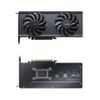

$379.99View
$379.99
$379.99
$399.99View
$399.99View

$399.99View
$399.99
$399.99
We check over 250 million products every day for the best prices

The Verdict65Read our review policyIntel Arc B580The one thing the Arc B580 had to do was perform consistently, had it done so it would be the best budget gaming GPU out there. For games where it does perform it actually is right now. But inconsistency not only in straight performance, but also whether a game would run or not, have made it all but impossible to recommend this card at launch.
The Verdict
The Verdict
65Read our review policyIntel Arc B580The one thing the Arc B580 had to do was perform consistently, had it done so it would be the best budget gaming GPU out there. For games where it does perform it actually is right now. But inconsistency not only in straight performance, but also whether a game would run or not, have made it all but impossible to recommend this card at launch.
65Read our review policy
65
Intel Arc B580The one thing the Arc B580 had to do was perform consistently, had it done so it would be the best budget gaming GPU out there. For games where it does perform it actually is right now. But inconsistency not only in straight performance, but also whether a game would run or not, have made it all but impossible to recommend this card at launch.
Intel Arc B580
The one thing the Arc B580 had to do was perform consistently, had it done so it would be the best budget gaming GPU out there. For games where it does perform it actually is right now. But inconsistency not only in straight performance, but also whether a game would run or not, have made it all but impossible to recommend this card at launch.
TOPICSHardware
TOPICS
Latest
Wormhole is an impeccable arcade revival of Snake that plays like it fell off the back of Derek Yu’s van
Wormhole is an impeccable arcade revival of Snake that plays like it fell off the back of Derek Yu’s van
My Summer Car, the absurdly detailed Finnish life sim about vehicle maintenance and drinking in your underpants, smashes into 1.0 after nearly a decade in Steam early access
My Summer Car, the absurdly detailed Finnish life sim about vehicle maintenance and drinking in your underpants, smashes into 1.0 after nearly a decade in Steam early access
See more latest►
Most PopularTurtle Beach Stealth Pivot reviewIkea Matchspel gaming chair reviewASRock DeskMini X600 reviewZotac Zbox Magnus EN374070C reviewMinisforum AtomMan G7 Ti reviewSamsung Galaxy Book4 Ultra reviewNoctua NH-D15 G2 reviewGulikit KK3 Max reviewBallionaire reviewMarvel Rivals reviewBe Quiet! Dark Rock 5 review
Most PopularTurtle Beach Stealth Pivot reviewIkea Matchspel gaming chair reviewASRock DeskMini X600 reviewZotac Zbox Magnus EN374070C reviewMinisforum AtomMan G7 Ti reviewSamsung Galaxy Book4 Ultra reviewNoctua NH-D15 G2 reviewGulikit KK3 Max reviewBallionaire reviewMarvel Rivals reviewBe Quiet! Dark Rock 5 review
Most PopularTurtle Beach Stealth Pivot reviewIkea Matchspel gaming chair reviewASRock DeskMini X600 reviewZotac Zbox Magnus EN374070C reviewMinisforum AtomMan G7 Ti reviewSamsung Galaxy Book4 Ultra reviewNoctua NH-D15 G2 reviewGulikit KK3 Max reviewBallionaire reviewMarvel Rivals reviewBe Quiet! Dark Rock 5 review
Most Popular
Turtle Beach Stealth Pivot review
Ikea Matchspel gaming chair review
ASRock DeskMini X600 review
Zotac Zbox Magnus EN374070C review
Minisforum AtomMan G7 Ti review
Samsung Galaxy Book4 Ultra review
Noctua NH-D15 G2 review
Gulikit KK3 Max review
Ballionaire review
Marvel Rivals review
Be Quiet! Dark Rock 5 review
HARDWARE BUYING GUIDESLATEST GAME REVIEWS1Best Steam Deck accessories in Australia for 2025: Our favorite docks, powerbanks and gamepads2Best graphics card for laptops: the mobile GPUs I’d want in my next gaming laptop3Best mini PCs in 2025: The compact computers I love the most4Best 14-inch gaming laptop: The top compact gaming laptops I’ve held in these hands5Best Mini-ITX motherboards in 2025: My pick from all the mini mobo marvels I’ve tested1Thank Goodness You’re Here! review2Shiren the Wanderer: The Mystery Dungeon of Serpentcoil Island review3WD Black SN850X 8 TB NVMe SSD review4Ikea Utespelare desk review5Asus ROG Harpe Ace Mini wireless mouse review
HARDWARE BUYING GUIDESLATEST GAME REVIEWS1Best Steam Deck accessories in Australia for 2025: Our favorite docks, powerbanks and gamepads2Best graphics card for laptops: the mobile GPUs I’d want in my next gaming laptop3Best mini PCs in 2025: The compact computers I love the most4Best 14-inch gaming laptop: The top compact gaming laptops I’ve held in these hands5Best Mini-ITX motherboards in 2025: My pick from all the mini mobo marvels I’ve tested1Thank Goodness You’re Here! review2Shiren the Wanderer: The Mystery Dungeon of Serpentcoil Island review3WD Black SN850X 8 TB NVMe SSD review4Ikea Utespelare desk review5Asus ROG Harpe Ace Mini wireless mouse review
HARDWARE BUYING GUIDESLATEST GAME REVIEWS1Best Steam Deck accessories in Australia for 2025: Our favorite docks, powerbanks and gamepads2Best graphics card for laptops: the mobile GPUs I’d want in my next gaming laptop3Best mini PCs in 2025: The compact computers I love the most4Best 14-inch gaming laptop: The top compact gaming laptops I’ve held in these hands5Best Mini-ITX motherboards in 2025: My pick from all the mini mobo marvels I’ve tested1Thank Goodness You’re Here! review2Shiren the Wanderer: The Mystery Dungeon of Serpentcoil Island review3WD Black SN850X 8 TB NVMe SSD review4Ikea Utespelare desk review5Asus ROG Harpe Ace Mini wireless mouse review
HARDWARE BUYING GUIDESLATEST GAME REVIEWS1Best Steam Deck accessories in Australia for 2025: Our favorite docks, powerbanks and gamepads2Best graphics card for laptops: the mobile GPUs I’d want in my next gaming laptop3Best mini PCs in 2025: The compact computers I love the most4Best 14-inch gaming laptop: The top compact gaming laptops I’ve held in these hands5Best Mini-ITX motherboards in 2025: My pick from all the mini mobo marvels I’ve tested1Thank Goodness You’re Here! review2Shiren the Wanderer: The Mystery Dungeon of Serpentcoil Island review3WD Black SN850X 8 TB NVMe SSD review4Ikea Utespelare desk review5Asus ROG Harpe Ace Mini wireless mouse review
HARDWARE BUYING GUIDESLATEST GAME REVIEWS
1Best Steam Deck accessories in Australia for 2025: Our favorite docks, powerbanks and gamepads
1Best Steam Deck accessories in Australia for 2025: Our favorite docks, powerbanks and gamepads
1
Best Steam Deck accessories in Australia for 2025: Our favorite docks, powerbanks and gamepads
2Best graphics card for laptops: the mobile GPUs I’d want in my next gaming laptop
2Best graphics card for laptops: the mobile GPUs I’d want in my next gaming laptop
2
Best graphics card for laptops: the mobile GPUs I’d want in my next gaming laptop
3Best mini PCs in 2025: The compact computers I love the most
3Best mini PCs in 2025: The compact computers I love the most
3
Best mini PCs in 2025: The compact computers I love the most
4Best 14-inch gaming laptop: The top compact gaming laptops I’ve held in these hands
4Best 14-inch gaming laptop: The top compact gaming laptops I’ve held in these hands
4
Best 14-inch gaming laptop: The top compact gaming laptops I’ve held in these hands
5Best Mini-ITX motherboards in 2025: My pick from all the mini mobo marvels I’ve tested
5Best Mini-ITX motherboards in 2025: My pick from all the mini mobo marvels I’ve tested
5
Best Mini-ITX motherboards in 2025: My pick from all the mini mobo marvels I’ve tested
1Thank Goodness You’re Here! review
1Thank Goodness You’re Here! review
1
Thank Goodness You’re Here! review
2Shiren the Wanderer: The Mystery Dungeon of Serpentcoil Island review
2Shiren the Wanderer: The Mystery Dungeon of Serpentcoil Island review
2
Shiren the Wanderer: The Mystery Dungeon of Serpentcoil Island review
3WD Black SN850X 8 TB NVMe SSD review
3WD Black SN850X 8 TB NVMe SSD review
3
WD Black SN850X 8 TB NVMe SSD review
4Ikea Utespelare desk review
4Ikea Utespelare desk review
4
Ikea Utespelare desk review
5Asus ROG Harpe Ace Mini wireless mouse review
5Asus ROG Harpe Ace Mini wireless mouse review
5
Asus ROG Harpe Ace Mini wireless mouse review
