Our VerdictIt’s a Formula 1 car of mice, and that means blistering speed and performance. It also means it’s very expensive, uncomfortable if you’re the wrong size, and a pain to use for normal tasks.
Our VerdictIt’s a Formula 1 car of mice, and that means blistering speed and performance. It also means it’s very expensive, uncomfortable if you’re the wrong size, and a pain to use for normal tasks.
Our Verdict
Our Verdict
It’s a Formula 1 car of mice, and that means blistering speed and performance. It also means it’s very expensive, uncomfortable if you’re the wrong size, and a pain to use for normal tasks.
ForSuperb tracking performanceExceptionally lightFaultless wireless connectionSolid button and wheel actionAgainstNot great outside of gaming8 kHz polling rate eats battery chargeVery expensiveBland design
ForSuperb tracking performanceExceptionally lightFaultless wireless connectionSolid button and wheel action
AgainstNot great outside of gaming8 kHz polling rate eats battery chargeVery expensiveBland design
PC Gamer’s got your backOur experienced team dedicates many hours to every review, to really get to the heart of what matters most to you.Find out more about how we evaluate games and hardware.
PC Gamer’s got your backOur experienced team dedicates many hours to every review, to really get to the heart of what matters most to you.Find out more about how we evaluate games and hardware.
$159.98View$159.99View$159.99ViewShow More DealsWe check over 250 million products every day for the best prices
$159.98View$159.99View$159.99ViewShow More DealsWe check over 250 million products every day for the best prices
$159.98View$159.99View$159.99View
$159.98View
$159.98View


$159.98View
$159.98
$159.98
$159.99View
$159.99View

$159.99View
$159.99
$159.99
$159.99View
$159.99View

$159.99View
$159.99
$159.99
Show More Deals
Show More Deals
We check over 250 million products every day for the best prices
We check over 250 million products every day for the best prices
“For the pro,” says Razer’smarketing line. “The GOAT of wireless esports mice returns to reshape the competitive scene.” If you know what any of that means, you’ll know exactly what you’re getting here. A mouse that’s extremely light and has a very high sensitivity and polling rate. The thing is, that’s not exactly rare amongst extreme gaming mice, so what exactly is Razer offering that’s different in its new Viper V3 Pro?
Perhaps more important are the changes that Razer has implemented over its predecessor, theViper V2 Pro, as that offered all the above features. Well, the main shell and buttons have been slightly redesigned, the optical sensor has been updated, and a few grams of weight have been shaved off.
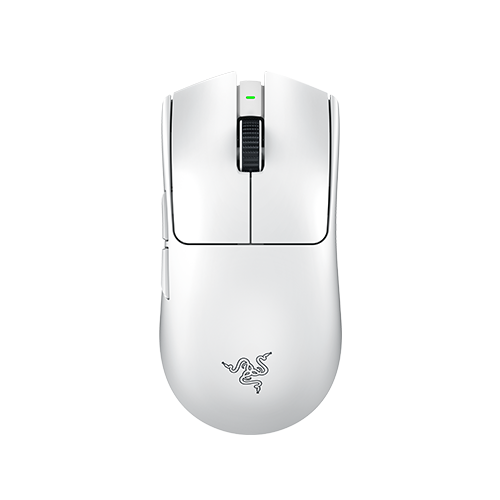
Starting with the design, where the V2 Pro had raised sections just behind the left and right buttons, the V3 Pro has been completely smoothed out and in general, the overall design is now very conservative. The buttons are still Razer-styled but other than that, the Viper V3 Pro doesn’t exactlylooklike it’s a cutting-edge mouse. Given the fact that it’s$158/£155/AU$279, it’s not immediately obvious as to where Razer has spent its money on updating the design.
I can’t say I’m a fan of the material used for the shell, either—the plastic attracts fingerprints like a grease magnet and the mouse needed to be furiously cleaned, repeatedly, before any pictures could be taken. It also feels a bit on the cheap side, although that’s mostly down to Razer’s decision to make the Viper V3 Pro as light as possible.
Viper V3 Pro specs(Image credit: Future)Buttons:6Feet:PTFEConnectivity:wired (USB-C), wireless (USB-C dongle)Sensor:Focus Pro 35K Optical Sensor Gen-2Max DPI:35,000Max acceleration:70 gMax speed:750 IPSPolling rate:up to 8,000 Hz wireless | 1,000 Hz wiredBattery life:95 Hrs (1,000 Hz) to 17 Hrs (8,000 Hz)RGB lighting:noneWarranty:2 yearsPrice:$158|£155|AU$279
Viper V3 Pro specs
(Image credit: Future)Buttons:6Feet:PTFEConnectivity:wired (USB-C), wireless (USB-C dongle)Sensor:Focus Pro 35K Optical Sensor Gen-2Max DPI:35,000Max acceleration:70 gMax speed:750 IPSPolling rate:up to 8,000 Hz wireless | 1,000 Hz wiredBattery life:95 Hrs (1,000 Hz) to 17 Hrs (8,000 Hz)RGB lighting:noneWarranty:2 yearsPrice:$158|£155|AU$279
(Image credit: Future)

Buttons:6Feet:PTFEConnectivity:wired (USB-C), wireless (USB-C dongle)Sensor:Focus Pro 35K Optical Sensor Gen-2Max DPI:35,000Max acceleration:70 gMax speed:750 IPSPolling rate:up to 8,000 Hz wireless | 1,000 Hz wiredBattery life:95 Hrs (1,000 Hz) to 17 Hrs (8,000 Hz)RGB lighting:noneWarranty:2 yearsPrice:$158|£155|AU$279
At 54 g (55 g for the white version), it’s 4 g lighter than the V2 Pro, though that mouse could hardly be classed as being heavy. It feels exceptionally featherweight, so much so that I’m convinced a strong fan could blow it across a mouse pad. Okay, I’m exaggerating somewhat, but if you need a mouse with minimal mass, the Viper V3 Pro is certainly one to consider.
While the whole thing has a very airy (read: thin and hollow) feel to it, at least the buttons and wheels are properly solid. Optical switches underneath the main buttons help with speedy clicks but they’d be for nothing if the action was terrible. It’s absolutely not and everything has a reassuring positiveness to it, especially the wheel.
You can really feel the notches as you spin it around, and if you prefer to flick the mouse wheel to change weapons in the middle of a heated battle, you’ll be thankful for Razer’s design. Outside of gaming, though, it’s not so hot—scrolling through webpages or long documents is pretty tedious, and the Synapse software has no option to customise this action.
What you can alter in Razer’s software is the sensitivity and polling rate. The former can be cycled through five stages via a small button in the mouse’s base, and you can configure what DPI each press jumps to in Synapse. I do wish there was a second button, though, to make it much easier to cycle back and forth through the sensitivity options.
(Image credit: Razer)

That sole button also acts as the power switch, with a long press being required to power it on and off.
A simple twitch of a single muscle fibre will have your crosshair flying about; blink a little too firmly and you’ll be server kicked for friendly fire. Such extreme sensitivity is obviously only there for those that really need it and I was more than happy with 3,200 DPI.
Something else that’s only for the select few is the 8,000 Hz polling rate. Peripherals such as mice and keyboards can’t interrupt the CPU to issue a new command; instead, the operating system checks for inputs at a set rate. For most wireless mice, this rate is 1,000 Hz.
Razer’s Hyperpolling system increases this and the Viper V3 Pro now supports 2,000 and 4,000 Hz, in addition to the all-out 8 kHz setting. Just as with the sensitivity, super high polling rates aren’t going to be of much use to the average PC gamer, even for those who are keen on competitive shooters.
Image1of4(Image credit: Future)(Image credit: Future)(Image credit: Future)(Image credit: Future)
Image1of4(Image credit: Future)(Image credit: Future)(Image credit: Future)(Image credit: Future)
Image1of4
(Image credit: Future)(Image credit: Future)(Image credit: Future)(Image credit: Future)
(Image credit: Future)(Image credit: Future)(Image credit: Future)(Image credit: Future)
(Image credit: Future)
(Image credit: Future)
(Image credit: Future)
(Image credit: Future)
(Image credit: Future)

(Image credit: Future)
(Image credit: Future)
(Image credit: Future)
(Image credit: Future)
(Image credit: Future)
(Image credit: Future)
(Image credit: Future)
(Image credit: Future)
(Image credit: Future)
(Image credit: Future)
(Image credit: Future)
(Image credit: Future)
(Image credit: Future)
(Image credit: Future)
(Image credit: Future)
Where I could notice a difference between 1 kHz and 2 kHz in Counter-Strike 2, anything higher produced no perceptible improvement for me. What I did notice, though, was that leaving at a high polling rate seriously chomped through the battery’s charge.
It’s rated to 95 hours when using the standard 1,000 Hz polling rate but it drops to just 17 hours at 8,000 Hz. Those claims seem about right, as the Synapse software showed around 12% of battery charge use from 2 hours of gameplay when using 8 kHz polling.
Should that be a concern, then the Synapse software has the option to switch to a higher polling rate when gaming and use a lower, power-friendly rate when using Windows and other apps. That feature is well worth enabling, as the Viper V3 Pro’s battery does charge as fast as other mice I’ve used and tested of late.
The 2nd-gen Focus Pro 35K Optical Sensor and 8K HyperPolling are all well and good, but they’d be for nought if the actual tracking performance of the mouse wasn’t up to spec. So I ran through benchmarks viaMouseTesterto see how the Viper V3 Pro actually fares—what you’re looking for is how spread out the dots are in the graphs below. The more tightly packed they are, the better the mouse is at reporting movement.
Image1of8(Image credit: Future)1,000 Hz — The closer the dots are together, the more consistent a mouse is reporting movement. More variation or stray dots makes for a less accurate sensor.(Image credit: Future)1,000 Hz — Each dot represents an update, which corresponds to the polling rate. Every 1 ms should mark a single update on a 1,000 Hz mouse.(Image credit: Future)2,000 Hz — The closer the dots are together, the more consistent a mouse is reporting movement. More variation or stray dots makes for a less accurate sensor.(Image credit: Future)2,000 Hz — Each dot represents an update, which corresponds to the polling rate. Every 1 ms should mark a single update on a 1,000 Hz mouse.(Image credit: Future)4,000 Hz — The closer the dots are together, the more consistent a mouse is reporting movement. More variation or stray dots makes for a less accurate sensor.(Image credit: Future)4,000 Hz — Each dot represents an update, which corresponds to the polling rate. Every 1 ms should mark a single update on a 1,000 Hz mouse.(Image credit: Future)8,000 Hz — The closer the dots are together, the more consistent a mouse is reporting movement. More variation or stray dots makes for a less accurate sensor.(Image credit: Future)8,000 Hz — Each dot represents an update, which corresponds to the polling rate. Every 1 ms should mark a single update on a 1,000 Hz mouse.
Image1of8(Image credit: Future)1,000 Hz — The closer the dots are together, the more consistent a mouse is reporting movement. More variation or stray dots makes for a less accurate sensor.(Image credit: Future)1,000 Hz — Each dot represents an update, which corresponds to the polling rate. Every 1 ms should mark a single update on a 1,000 Hz mouse.(Image credit: Future)2,000 Hz — The closer the dots are together, the more consistent a mouse is reporting movement. More variation or stray dots makes for a less accurate sensor.(Image credit: Future)2,000 Hz — Each dot represents an update, which corresponds to the polling rate. Every 1 ms should mark a single update on a 1,000 Hz mouse.(Image credit: Future)4,000 Hz — The closer the dots are together, the more consistent a mouse is reporting movement. More variation or stray dots makes for a less accurate sensor.(Image credit: Future)4,000 Hz — Each dot represents an update, which corresponds to the polling rate. Every 1 ms should mark a single update on a 1,000 Hz mouse.(Image credit: Future)8,000 Hz — The closer the dots are together, the more consistent a mouse is reporting movement. More variation or stray dots makes for a less accurate sensor.(Image credit: Future)8,000 Hz — Each dot represents an update, which corresponds to the polling rate. Every 1 ms should mark a single update on a 1,000 Hz mouse.
Image1of8
(Image credit: Future)1,000 Hz — The closer the dots are together, the more consistent a mouse is reporting movement. More variation or stray dots makes for a less accurate sensor.(Image credit: Future)1,000 Hz — Each dot represents an update, which corresponds to the polling rate. Every 1 ms should mark a single update on a 1,000 Hz mouse.(Image credit: Future)2,000 Hz — The closer the dots are together, the more consistent a mouse is reporting movement. More variation or stray dots makes for a less accurate sensor.(Image credit: Future)2,000 Hz — Each dot represents an update, which corresponds to the polling rate. Every 1 ms should mark a single update on a 1,000 Hz mouse.(Image credit: Future)4,000 Hz — The closer the dots are together, the more consistent a mouse is reporting movement. More variation or stray dots makes for a less accurate sensor.(Image credit: Future)4,000 Hz — Each dot represents an update, which corresponds to the polling rate. Every 1 ms should mark a single update on a 1,000 Hz mouse.(Image credit: Future)8,000 Hz — The closer the dots are together, the more consistent a mouse is reporting movement. More variation or stray dots makes for a less accurate sensor.(Image credit: Future)8,000 Hz — Each dot represents an update, which corresponds to the polling rate. Every 1 ms should mark a single update on a 1,000 Hz mouse.
(Image credit: Future)1,000 Hz — The closer the dots are together, the more consistent a mouse is reporting movement. More variation or stray dots makes for a less accurate sensor.(Image credit: Future)1,000 Hz — Each dot represents an update, which corresponds to the polling rate. Every 1 ms should mark a single update on a 1,000 Hz mouse.(Image credit: Future)2,000 Hz — The closer the dots are together, the more consistent a mouse is reporting movement. More variation or stray dots makes for a less accurate sensor.(Image credit: Future)2,000 Hz — Each dot represents an update, which corresponds to the polling rate. Every 1 ms should mark a single update on a 1,000 Hz mouse.(Image credit: Future)4,000 Hz — The closer the dots are together, the more consistent a mouse is reporting movement. More variation or stray dots makes for a less accurate sensor.(Image credit: Future)4,000 Hz — Each dot represents an update, which corresponds to the polling rate. Every 1 ms should mark a single update on a 1,000 Hz mouse.(Image credit: Future)8,000 Hz — The closer the dots are together, the more consistent a mouse is reporting movement. More variation or stray dots makes for a less accurate sensor.(Image credit: Future)8,000 Hz — Each dot represents an update, which corresponds to the polling rate. Every 1 ms should mark a single update on a 1,000 Hz mouse.
(Image credit: Future)1,000 Hz — The closer the dots are together, the more consistent a mouse is reporting movement. More variation or stray dots makes for a less accurate sensor.
(Image credit: Future)1,000 Hz — The closer the dots are together, the more consistent a mouse is reporting movement. More variation or stray dots makes for a less accurate sensor.
(Image credit: Future)
(Image credit: Future)
(Image credit: Future)
1,000 Hz — The closer the dots are together, the more consistent a mouse is reporting movement. More variation or stray dots makes for a less accurate sensor.
1,000 Hz — The closer the dots are together, the more consistent a mouse is reporting movement. More variation or stray dots makes for a less accurate sensor.
(Image credit: Future)1,000 Hz — Each dot represents an update, which corresponds to the polling rate. Every 1 ms should mark a single update on a 1,000 Hz mouse.
(Image credit: Future)1,000 Hz — Each dot represents an update, which corresponds to the polling rate. Every 1 ms should mark a single update on a 1,000 Hz mouse.
(Image credit: Future)
(Image credit: Future)
(Image credit: Future)
1,000 Hz — Each dot represents an update, which corresponds to the polling rate. Every 1 ms should mark a single update on a 1,000 Hz mouse.
1,000 Hz — Each dot represents an update, which corresponds to the polling rate. Every 1 ms should mark a single update on a 1,000 Hz mouse.
(Image credit: Future)2,000 Hz — The closer the dots are together, the more consistent a mouse is reporting movement. More variation or stray dots makes for a less accurate sensor.
(Image credit: Future)2,000 Hz — The closer the dots are together, the more consistent a mouse is reporting movement. More variation or stray dots makes for a less accurate sensor.
(Image credit: Future)
(Image credit: Future)
(Image credit: Future)
2,000 Hz — The closer the dots are together, the more consistent a mouse is reporting movement. More variation or stray dots makes for a less accurate sensor.
2,000 Hz — The closer the dots are together, the more consistent a mouse is reporting movement. More variation or stray dots makes for a less accurate sensor.
(Image credit: Future)2,000 Hz — Each dot represents an update, which corresponds to the polling rate. Every 1 ms should mark a single update on a 1,000 Hz mouse.
(Image credit: Future)2,000 Hz — Each dot represents an update, which corresponds to the polling rate. Every 1 ms should mark a single update on a 1,000 Hz mouse.
(Image credit: Future)
(Image credit: Future)
(Image credit: Future)
2,000 Hz — Each dot represents an update, which corresponds to the polling rate. Every 1 ms should mark a single update on a 1,000 Hz mouse.
2,000 Hz — Each dot represents an update, which corresponds to the polling rate. Every 1 ms should mark a single update on a 1,000 Hz mouse.
(Image credit: Future)4,000 Hz — The closer the dots are together, the more consistent a mouse is reporting movement. More variation or stray dots makes for a less accurate sensor.
(Image credit: Future)4,000 Hz — The closer the dots are together, the more consistent a mouse is reporting movement. More variation or stray dots makes for a less accurate sensor.
(Image credit: Future)
(Image credit: Future)
(Image credit: Future)
4,000 Hz — The closer the dots are together, the more consistent a mouse is reporting movement. More variation or stray dots makes for a less accurate sensor.
4,000 Hz — The closer the dots are together, the more consistent a mouse is reporting movement. More variation or stray dots makes for a less accurate sensor.
(Image credit: Future)4,000 Hz — Each dot represents an update, which corresponds to the polling rate. Every 1 ms should mark a single update on a 1,000 Hz mouse.
(Image credit: Future)4,000 Hz — Each dot represents an update, which corresponds to the polling rate. Every 1 ms should mark a single update on a 1,000 Hz mouse.
(Image credit: Future)
(Image credit: Future)
(Image credit: Future)
4,000 Hz — Each dot represents an update, which corresponds to the polling rate. Every 1 ms should mark a single update on a 1,000 Hz mouse.
4,000 Hz — Each dot represents an update, which corresponds to the polling rate. Every 1 ms should mark a single update on a 1,000 Hz mouse.
(Image credit: Future)8,000 Hz — The closer the dots are together, the more consistent a mouse is reporting movement. More variation or stray dots makes for a less accurate sensor.
(Image credit: Future)8,000 Hz — The closer the dots are together, the more consistent a mouse is reporting movement. More variation or stray dots makes for a less accurate sensor.
(Image credit: Future)
(Image credit: Future)
(Image credit: Future)
8,000 Hz — The closer the dots are together, the more consistent a mouse is reporting movement. More variation or stray dots makes for a less accurate sensor.
8,000 Hz — The closer the dots are together, the more consistent a mouse is reporting movement. More variation or stray dots makes for a less accurate sensor.
(Image credit: Future)8,000 Hz — Each dot represents an update, which corresponds to the polling rate. Every 1 ms should mark a single update on a 1,000 Hz mouse.
(Image credit: Future)8,000 Hz — Each dot represents an update, which corresponds to the polling rate. Every 1 ms should mark a single update on a 1,000 Hz mouse.
(Image credit: Future)
(Image credit: Future)
(Image credit: Future)
8,000 Hz — Each dot represents an update, which corresponds to the polling rate. Every 1 ms should mark a single update on a 1,000 Hz mouse.
8,000 Hz — Each dot represents an update, which corresponds to the polling rate. Every 1 ms should mark a single update on a 1,000 Hz mouse.
Ignore the various spikes in the above charts (that’s my wonky mouse movement) and focus on how much and how often the points are vertically separated from the overall curve. As you can see, the Viper V3 Pro tracks very well and the interval charts (the ones with the flat lines) prove that Razer’s optical sensor and wireless system have no issue in keeping pace with everything.
Polling rates above 1 kHz do add a bit more load to the CPU so if you need the very highest frame rates in your games, then you’ll have to find the right balance between polling rate and game performance. Just slapping it to 8 kHz frame rate and hoping for the best isn’t sensible.
Buy if…✅ You must have hyper-sensitivity and ultra-high polling rates:Whether it’s for bragging rights or actual gaming benefit, there’s nothing to touch the Viper V3 Pro in terms of sheer speed.✅ You want a mouse that feels like air:At just 54 g, this mouse is perfect for those who hate rodents with mass. It’s hard to imagine how much lighter Razer could make it.
Buy if…
✅ You must have hyper-sensitivity and ultra-high polling rates:Whether it’s for bragging rights or actual gaming benefit, there’s nothing to touch the Viper V3 Pro in terms of sheer speed.✅ You want a mouse that feels like air:At just 54 g, this mouse is perfect for those who hate rodents with mass. It’s hard to imagine how much lighter Razer could make it.
✅ You must have hyper-sensitivity and ultra-high polling rates:Whether it’s for bragging rights or actual gaming benefit, there’s nothing to touch the Viper V3 Pro in terms of sheer speed.
✅ You want a mouse that feels like air:At just 54 g, this mouse is perfect for those who hate rodents with mass. It’s hard to imagine how much lighter Razer could make it.
Don’t buy if…❌ You’re not a serious esports competitor:What makes it great for ultra-fast gaming, where real money is on the line, also makes the Viper V3 Pro uncomfortable and awkward in general use.❌ You hate constantly charging a device:The Viper V3 Pro’s battery life is pretty good with a standard polling rate but drops to disappointing levels when maxed out.
Don’t buy if…
❌ You’re not a serious esports competitor:What makes it great for ultra-fast gaming, where real money is on the line, also makes the Viper V3 Pro uncomfortable and awkward in general use.❌ You hate constantly charging a device:The Viper V3 Pro’s battery life is pretty good with a standard polling rate but drops to disappointing levels when maxed out.
❌ You’re not a serious esports competitor:What makes it great for ultra-fast gaming, where real money is on the line, also makes the Viper V3 Pro uncomfortable and awkward in general use.
❌ You hate constantly charging a device:The Viper V3 Pro’s battery life is pretty good with a standard polling rate but drops to disappointing levels when maxed out.
It’s also worth noting that if you use the supplied high-quality, braided USB Type-C so that the Viper V3 Pro is in wired mode, then the maximum polling rate on offer is the standard 1 kHz. Of course, using a cable hugely interferes with how light and easy the mouse is to move about, and the wireless connection is exceptionally good, so you’re only going to be doing this to charge it.
After spending a week of gaming and working with Razer’s Viper V3 Pro, I came to realise that I was faced with a conundrum, with regards to how best to review it. On the one hand, it felt like I had been given one of the latest Formula 1 cars to test drive around a circuit and then compare it to other F1 machines.
While I’ve done circuit racing a bit, many years ago, I’m simply not capable of pushing such cars to anywhere near their limits to discern any differences between them.
It’s the same with the Viper V3 Pro. I’m not a professional esports competitor; heck, I’m not even remotely good at Counter-Strike 2, DOTA 2, or Valorant. So how could I possibly know what’s good or bad, when it comes to gaming mice that are specifically targeted at such people? I simply don’t have that level of skill, precision, and requirements of accuracy.
On the other hand, neither do the vast majority of PC Gamers to whom Razer is marketing this mouse. Sure, millions of folks are way better than me at competitor shooters and the like, but that doesn’t mean they’ll be able to tell the difference between a 4 kHz and 8 kHz polling rate.
Razer’s DeathAdder V3 (left) vs Viper V3 Pro (right)(Image credit: Future)

They’re going to form the majority of people who may want to buy and use this mouse, though, and on that basis, Icanform a conclusion as to whether the Razer Viper V3 Pro is good or not.
I found it to be too small and too light for my tastes; I didn’t like how the shell felt in my hand, either. I also felt the DPI cycling system was a bit too fiddly. Oh, and it’s very expensive for a mouse that’s exceptionally narrow in focus. It’s very much a Ferrari in a field of Fords, albeit a rather bland-looking one.
However, I do have another Razer mouse that gets used a lot in my office, the wired DeathAdder V3. Compared to that, the Viper V3 Pro was quite a lot nicer to game with—in part, that’s down to its wireless nature (I’m of the opinion that wired mice are the spawn of the Devil) but also because it was more accurate and tracked better on different surfaces.
It’s very well built, with positive actions to every button and the wheel. The huge PTFE feet mean it glides effortlessly across most materials. Razer’s packaging is top-notch, with a surprisingly decent USB cable. But then again, it should be at this price.
As to whether one should buy the Viper V3 Pro, that’s ultimately a matter of need (expense aside). Do youneedone of the lightest mice around? Do youneed8 kHz polling? Do youneedup to 35,000 DPI? Or put more simply, do you need the ultimate esports mouse? If the answer is yes to any of those, then Razer’s latest Viper should be seriously considered.
But if the answer is no, then there are more suitable choices on offer and you should check out what we think are thebest gaming miceout there.
Razer Viper V3 Pro: Price Comparison
$159.98View$159.99View$159.99View$159.99View$171.95View
$159.98View
$159.98View
$159.98View
$159.98
$159.98
$159.99View
$159.99View
$159.99View
$159.99
$159.99
$159.99View
$159.99View
$159.99View
$159.99
$159.99
$159.99View
$159.99View

$159.99View
$159.99
$159.99
$171.95View
$171.95View


$171.95View
$171.95
$171.95
Show More Deals
Show More Deals
We check over 250 million products every day for the best prices

The Verdict84Read our review policyRazer Viper V3 ProIt’s a Formula 1 car of mice, and that means blistering speed and performance. It also means it’s very expensive, uncomfortable if you’re the wrong size, and a pain to use for normal tasks.
The Verdict
The Verdict
84Read our review policyRazer Viper V3 ProIt’s a Formula 1 car of mice, and that means blistering speed and performance. It also means it’s very expensive, uncomfortable if you’re the wrong size, and a pain to use for normal tasks.
84Read our review policy
84
Razer Viper V3 ProIt’s a Formula 1 car of mice, and that means blistering speed and performance. It also means it’s very expensive, uncomfortable if you’re the wrong size, and a pain to use for normal tasks.
Razer Viper V3 Pro
It’s a Formula 1 car of mice, and that means blistering speed and performance. It also means it’s very expensive, uncomfortable if you’re the wrong size, and a pain to use for normal tasks.
TOPICSHardware
TOPICS
LatestTencent says it’s not a Chinese military company and is willing to sue the US Department of Defense if it isn’t removed from a blacklistAll Zenless Zone Zero 1.5 livestream codesAsus reveals three new Slash Travel Bags for carting around your ROG Ally—however, none of them are particularly fashion forwardSee more latest►
LatestTencent says it’s not a Chinese military company and is willing to sue the US Department of Defense if it isn’t removed from a blacklistAll Zenless Zone Zero 1.5 livestream codesAsus reveals three new Slash Travel Bags for carting around your ROG Ally—however, none of them are particularly fashion forwardSee more latest►
LatestTencent says it’s not a Chinese military company and is willing to sue the US Department of Defense if it isn’t removed from a blacklistAll Zenless Zone Zero 1.5 livestream codesAsus reveals three new Slash Travel Bags for carting around your ROG Ally—however, none of them are particularly fashion forwardSee more latest►
Latest
Tencent says it’s not a Chinese military company and is willing to sue the US Department of Defense if it isn’t removed from a blacklistAll Zenless Zone Zero 1.5 livestream codesAsus reveals three new Slash Travel Bags for carting around your ROG Ally—however, none of them are particularly fashion forward
Tencent says it’s not a Chinese military company and is willing to sue the US Department of Defense if it isn’t removed from a blacklist
Tencent says it’s not a Chinese military company and is willing to sue the US Department of Defense if it isn’t removed from a blacklist
All Zenless Zone Zero 1.5 livestream codes
All Zenless Zone Zero 1.5 livestream codes
Asus reveals three new Slash Travel Bags for carting around your ROG Ally—however, none of them are particularly fashion forward
Asus reveals three new Slash Travel Bags for carting around your ROG Ally—however, none of them are particularly fashion forward
See more latest►
Most PopularTurtle Beach Stealth Pivot reviewIkea Matchspel gaming chair reviewASRock DeskMini X600 reviewZotac Zbox Magnus EN374070C reviewMinisforum AtomMan G7 Ti reviewSamsung Galaxy Book4 Ultra reviewNoctua NH-D15 G2 reviewGulikit KK3 Max reviewBallionaire reviewMarvel Rivals reviewBe Quiet! Dark Rock 5 review
Most PopularTurtle Beach Stealth Pivot reviewIkea Matchspel gaming chair reviewASRock DeskMini X600 reviewZotac Zbox Magnus EN374070C reviewMinisforum AtomMan G7 Ti reviewSamsung Galaxy Book4 Ultra reviewNoctua NH-D15 G2 reviewGulikit KK3 Max reviewBallionaire reviewMarvel Rivals reviewBe Quiet! Dark Rock 5 review
Most PopularTurtle Beach Stealth Pivot reviewIkea Matchspel gaming chair reviewASRock DeskMini X600 reviewZotac Zbox Magnus EN374070C reviewMinisforum AtomMan G7 Ti reviewSamsung Galaxy Book4 Ultra reviewNoctua NH-D15 G2 reviewGulikit KK3 Max reviewBallionaire reviewMarvel Rivals reviewBe Quiet! Dark Rock 5 review
Most Popular
Turtle Beach Stealth Pivot review
Ikea Matchspel gaming chair review
ASRock DeskMini X600 review
Zotac Zbox Magnus EN374070C review
Minisforum AtomMan G7 Ti review
Samsung Galaxy Book4 Ultra review
Noctua NH-D15 G2 review
Gulikit KK3 Max review
Ballionaire review
Marvel Rivals review
Be Quiet! Dark Rock 5 review
HARDWARE BUYING GUIDESLATEST GAME REVIEWS1Best Steam Deck accessories in Australia for 2025: Our favorite docks, powerbanks and gamepads2Best graphics card for laptops: the mobile GPUs I’d want in my next gaming laptop3Best mini PCs in 2025: The compact computers I love the most4Best 14-inch gaming laptop: The top compact gaming laptops I’ve held in these hands5Best Mini-ITX motherboards in 2025: My pick from all the mini mobo marvels I’ve tested1Thank Goodness You’re Here! review: An anarchic treasure trove of jokes and skits2Shiren the Wanderer: The Mystery Dungeon of Serpentcoil Island review—like juggling chainsaws on horseback3WD Black SN850X 8 TB NVMe SSD review4Ikea Utespelare desk review5Asus ROG Harpe Ace Mini wireless mouse review
HARDWARE BUYING GUIDESLATEST GAME REVIEWS1Best Steam Deck accessories in Australia for 2025: Our favorite docks, powerbanks and gamepads2Best graphics card for laptops: the mobile GPUs I’d want in my next gaming laptop3Best mini PCs in 2025: The compact computers I love the most4Best 14-inch gaming laptop: The top compact gaming laptops I’ve held in these hands5Best Mini-ITX motherboards in 2025: My pick from all the mini mobo marvels I’ve tested1Thank Goodness You’re Here! review: An anarchic treasure trove of jokes and skits2Shiren the Wanderer: The Mystery Dungeon of Serpentcoil Island review—like juggling chainsaws on horseback3WD Black SN850X 8 TB NVMe SSD review4Ikea Utespelare desk review5Asus ROG Harpe Ace Mini wireless mouse review
HARDWARE BUYING GUIDESLATEST GAME REVIEWS1Best Steam Deck accessories in Australia for 2025: Our favorite docks, powerbanks and gamepads2Best graphics card for laptops: the mobile GPUs I’d want in my next gaming laptop3Best mini PCs in 2025: The compact computers I love the most4Best 14-inch gaming laptop: The top compact gaming laptops I’ve held in these hands5Best Mini-ITX motherboards in 2025: My pick from all the mini mobo marvels I’ve tested1Thank Goodness You’re Here! review: An anarchic treasure trove of jokes and skits2Shiren the Wanderer: The Mystery Dungeon of Serpentcoil Island review—like juggling chainsaws on horseback3WD Black SN850X 8 TB NVMe SSD review4Ikea Utespelare desk review5Asus ROG Harpe Ace Mini wireless mouse review
HARDWARE BUYING GUIDESLATEST GAME REVIEWS1Best Steam Deck accessories in Australia for 2025: Our favorite docks, powerbanks and gamepads2Best graphics card for laptops: the mobile GPUs I’d want in my next gaming laptop3Best mini PCs in 2025: The compact computers I love the most4Best 14-inch gaming laptop: The top compact gaming laptops I’ve held in these hands5Best Mini-ITX motherboards in 2025: My pick from all the mini mobo marvels I’ve tested1Thank Goodness You’re Here! review: An anarchic treasure trove of jokes and skits2Shiren the Wanderer: The Mystery Dungeon of Serpentcoil Island review—like juggling chainsaws on horseback3WD Black SN850X 8 TB NVMe SSD review4Ikea Utespelare desk review5Asus ROG Harpe Ace Mini wireless mouse review
HARDWARE BUYING GUIDESLATEST GAME REVIEWS
1Best Steam Deck accessories in Australia for 2025: Our favorite docks, powerbanks and gamepads
1Best Steam Deck accessories in Australia for 2025: Our favorite docks, powerbanks and gamepads
1
Best Steam Deck accessories in Australia for 2025: Our favorite docks, powerbanks and gamepads
2Best graphics card for laptops: the mobile GPUs I’d want in my next gaming laptop
2Best graphics card for laptops: the mobile GPUs I’d want in my next gaming laptop
2
Best graphics card for laptops: the mobile GPUs I’d want in my next gaming laptop
3Best mini PCs in 2025: The compact computers I love the most
3Best mini PCs in 2025: The compact computers I love the most
3
Best mini PCs in 2025: The compact computers I love the most
4Best 14-inch gaming laptop: The top compact gaming laptops I’ve held in these hands
4Best 14-inch gaming laptop: The top compact gaming laptops I’ve held in these hands
4
Best 14-inch gaming laptop: The top compact gaming laptops I’ve held in these hands
5Best Mini-ITX motherboards in 2025: My pick from all the mini mobo marvels I’ve tested
5Best Mini-ITX motherboards in 2025: My pick from all the mini mobo marvels I’ve tested
5
Best Mini-ITX motherboards in 2025: My pick from all the mini mobo marvels I’ve tested
1Thank Goodness You’re Here! review: An anarchic treasure trove of jokes and skits
1Thank Goodness You’re Here! review: An anarchic treasure trove of jokes and skits
1
Thank Goodness You’re Here! review: An anarchic treasure trove of jokes and skits
2Shiren the Wanderer: The Mystery Dungeon of Serpentcoil Island review—like juggling chainsaws on horseback
2Shiren the Wanderer: The Mystery Dungeon of Serpentcoil Island review—like juggling chainsaws on horseback
2
Shiren the Wanderer: The Mystery Dungeon of Serpentcoil Island review—like juggling chainsaws on horseback
3WD Black SN850X 8 TB NVMe SSD review
3WD Black SN850X 8 TB NVMe SSD review
3
WD Black SN850X 8 TB NVMe SSD review
4Ikea Utespelare desk review
4Ikea Utespelare desk review
4
Ikea Utespelare desk review
5Asus ROG Harpe Ace Mini wireless mouse review
5Asus ROG Harpe Ace Mini wireless mouse review
5
Asus ROG Harpe Ace Mini wireless mouse review
