Our VerdictIronclad’s impressive sequel has made me proud to be a sinner.
Our VerdictIronclad’s impressive sequel has made me proud to be a sinner.
Our Verdict
Our Verdict
Ironclad’s impressive sequel has made me proud to be a sinner.
PC Gamer’s got your backOur experienced team dedicates many hours to every review, to really get to the heart of what matters most to you.Find out more about how we evaluate games and hardware.
PC Gamer’s got your backOur experienced team dedicates many hours to every review, to really get to the heart of what matters most to you.Find out more about how we evaluate games and hardware.
Need to knowWhat is it?A 4X-RTS hybrid full of massive space battles.Release dateAugust 15, 2024DeveloperIronclad GamesPublisherStardock EntertainmentReviewed onRTX 4090, Intel i9-13900k, 32GB RAMSteam DeckUnsupportedLinkOfficial site
Need to know
What is it?A 4X-RTS hybrid full of massive space battles.Release dateAugust 15, 2024DeveloperIronclad GamesPublisherStardock EntertainmentReviewed onRTX 4090, Intel i9-13900k, 32GB RAMSteam DeckUnsupportedLinkOfficial site
What is it?A 4X-RTS hybrid full of massive space battles.
Release dateAugust 15, 2024
DeveloperIronclad Games
PublisherStardock Entertainment
Reviewed onRTX 4090, Intel i9-13900k, 32GB RAM
Steam DeckUnsupported
LinkOfficial site
Sins of a Solar Empire 2’s journey to launch has been an extremely confusing one. It technically left early access on the Epic Games Store (very quietly) a while ago, but that 1.0 version was actually missing some big things, like the final faction, and in sore need of polish. Now it’s finally arrived on Steam, though, and I have some good news: it’s brilliant.
The original Sins and its beefy expansions pretty much nailed the cosmic combination of RTS and 4X, impressively marrying the two disparate genres in a way that maintained the excitement of real-time space battles and the measured pace of the kind of empire-building typically relegated to turn-based games. With so little left on the table you could be forgiven for thinking that this is not especially fertile ground for a sequel, but Ironclad has found plenty of ways to justify Sins 2.
Move heaven and earth
(Image credit: Stardock)

The dynamism inherent in each map is the headline attraction this time. Sins 2’s solar systems are not static maps. Planets and asteroids—collectively referred to as gravity wells, the territory in which all the game’s action takes place—now move along predetermined paths. The impact of these celestial mechanics depends on the configuration and size of the map—but if you don’t pay attention to the movement of the heavens, you’re just inviting marauding aliens into your backyard.
This was ideal, because Sins 2 is full of complexities that need to be unpicked. It does really try to make this endeavour less Herculean, though. A robust tutorial breaks down every mechanic and UI element, and there’s a welcome amount of automation. Scouts immediately start exploring the moment they are constructed; new ships can be created right from an individual fleet’s menu, before automatically travelling towards said fleet; and if you try to build something that has a tech prerequisite, the game will start researching it for you. But there’s still a lot to juggle.
(Image credit: Stardock)
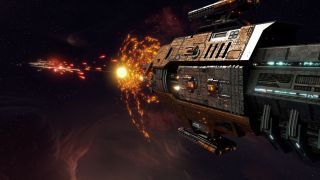
Now there wasn’t just a single phase lane connecting me to the rest of the system—there were multitudes, and every single one of my rivals now had a clear path to my territory. And everyone else’s. The peace was broken. At one point, all four of us converged upon a single planet, with lasers and projectiles and tiny strikecraft filling the screen in a glorious spectacle. After pottering around at a leisurely pace for an hour, this cataclysmic lightshow was like a shot of adrenaline right to the heart.
Celestial mechanics bless Sins 2’s wars with incredible texture, giving each map a unique rhythm and lively pace. Lively, but not always fast. As the phase lanes shift you can become unmoored from your opponents, getting some breathing room before everything links up again and the map becomes engulfed in explosions and ship debris. So you switch focus, maybe start expanding in a new direction, shore up your defences, or explore the new gravity wells that have appeared. And since you can see how much the map will shift within the next hour, you can plan accordingly, preparing your fleets for a big assault when the planets align once more.
Going full Ferengi
(Image credit: Stardock)
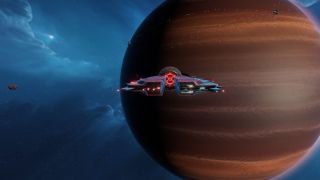
Each of the three factions' subfactions can broadly be divided into aggressive and defensive playstyles. So the Primacy nets you a powerful long-range titan—ships of such scale and power that each faction can only field one at a time—and an orbital cannon that can devastate entire worlds, as well as the ability to pal around with pirates and use propaganda to buff ships fighting around other gravity wells. The Enclave, meanwhile, is the only subfaction that can plonk down two starbases in a single location, which makes slapping them with an eviction notice a tall order.
So the TEC is rad, but I’m hard-pressed to pick a favourite faction. The cyber-spiritualists of the Advent Wrath enjoy one of the smoothest early games thanks to their ability to immediately colonise gravity wells adjacent to a location where they’ve constructed a Greater Temple of Pilgrimage after the gravity well has been cleared of hostiles. Their psionic abilities can also convert enemy ships, improve production and buff their own vessels. The ravenous aliens of the Vasari Exodus, meanwhile, use labour camps and their unique ability to strip worlds of all their natural resources to feed their apocalyptic warmachine. Instead of focusing on expansion and construction, they consume, giving playthroughs with this lot a very different flavour.
(Image credit: Stardock)
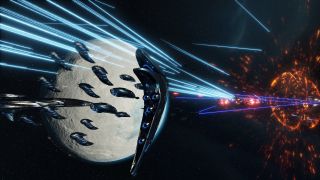
One thing each faction shares, however, is that they are all built for violence. Even the Vasari Alliance, with features designed to encourage cooperation, is ultimately trying to win a war. Sins 2 leaves concepts like science victories and galactic councils to the other 4Xs, while its other half, the RTS layer, demands blood, ravaged worlds and ruined ships.
One thing each faction shares, however, is that they are all built for violence.
One thing each faction shares, however, is that they are all built for violence.
This does leave the diplomatic side of things—especially in singleplayer—feeling a bit perfunctory. I found the AI largely disinterested in engaging with the barebones system, even when I offered stupid amounts of cash and resources. The treaties you’re able to offer are limited to cease fires, sharing vision, or a full alliance, as well as the secret fourth option: constant rejection. It would help a lot if I had some idea of what my opponents actually wanted, but nope, I just had to wing it. Want some credits? A planet? Why won’t someone be my pal?
With human players, the system is a bit more impactful thanks to the ability to actually communicate and tailor deals to your rival’s needs. Meatbags are untrustworthy, of course, but that’s why the alliance lock timer is such a welcome addition. When you’re making a deal, you set a specific duration, during which neither side can break the treaty. So you don’t need to trust the opposition’s intentions. Of course, nothing is stopping them from building up a massive fleet to attack you the moment the timer hits zero—but that blesses these treaties with some lovely, sweat-inducing tension.
(Image credit: Stardock)
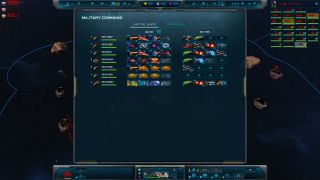
Minor factions can be handled with a different system: influence. You spend influence to unlock four reputation levels, each offering handy rewards, at the cost of more influence. These can be ship or planet items (traits or buildings that let you customise your fleet and empire), temporary alliances, or exotic resources that are necessary for constructing capital ships.
Working with these minor factions absolutely needs to be part of your strategy, and their name belies their substantial impact. They run resource markets (which vanish if they’re destroyed) and auctions, placing them at the heart of the economic side of the game. They can also serve as both a shield and a sword in your war with the other factions. But the way you engage with them, it’s all very mechanical. They don’t have agendas or personalities—there isn’t even a hint of flavour. This goes for all the factions, major or minor. They all exist in service of this—admittedly very grand—war.
Star destroyer
(Image credit: Stardock)
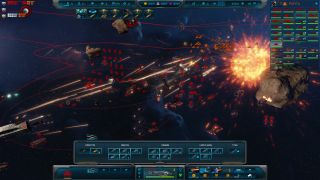
Stellaris has been my go-to 4X for years because even as a sandbox with no campaign, it can’t help but generate intricate, flavorful stories. This is true of less narrative-driven 4Xs, too: Mention Montezuma or Gandhi to a Civ player and you’re bound to get an emotional response. There’s absolutely none of this in Sins 2, despite boasting a setting and factions that could absolutely facilitate it. Ultimately, Sins 2 really just wants you to blow up loads of spaceships. But that’s OK. Better than OK, really. Because it makes blowing up spaceships an extremely good time.
Sins has never been about the micro, but it would be a mistake to ignore the details. Every vessel in your huge fleet is a complex machine where size, speed, weapons and defensive capabilities define its role and determine what you need to do to keep it alive. Or at least alive for long enough to mess up your adversary a wee bit. The greater the class of ship, the more complex they become. So while you can just let your tiny strikecraft burst out of their hangars and swarm enemy ships, when you’re dealing with your cruisers and capital ships—and especially your precious and costly titan—you need to be more hands-on.
The ship AI is reliable enough that composition and big picture strategies can get you far, so you don’t have to pick every target and keep repositioning them—unless you notice a bunch of ships randomly trying to blow up a trade port instead of the wall of unescorted drone-spewing support craft. You want some punchy front-liners, some long-range bad boys spitting out missiles from the edge of the gravity well, and some ships with point-defence capabilities to shoot enemy projectiles out of the sky. With just those bases covered, you’ll get some wins under your belt—at least on the default difficulty.
(Image credit: Stardock)
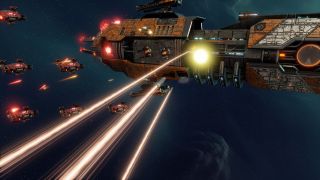
Pick a fight with some more challenging adversaries, however, or some human opponents, and you’ll need to stop watching Netflix on the other screen, sit up straight and perform the Picard manueover. Between their shields, hulls and special abilities, most ships can take a bit of a beating, but that just lulls you into a false sense of security—look away for a second and you could lose the fight. I almost lost my homeworld in one game because my dog started loudly grunting (he got stuck trying to get under the sofa), distracting me just long enough for a bunch of missile boats to sneak through a new phase lane and start blasting my extremely surprised fleet from the rear. Pro tip: If you need to investigate some grunting, at the very least you should pause the game.
The range of role-specific ships, tech upgrades and ship items means there’s an abundance of fleet customisation, without the need for a ship designer. And honestly, that’s ideal. Ship designers used to get me salivating, but they rarely justify the faffing around, and the benefits they do provide can be created with much simpler systems, as evidenced here. Select the right things and you can create unstoppable juggernauts with nigh-impenetrable hulls that constantly repair themselves; mobile, planet-killing warhead factories; and absolute beasts that murder everything that enters their vicinity.
Sins 2 also approaches space combat as this more tangible, physical event, simulating individual projectiles and actually taking into account what’s sitting between them and their target. This means you can use your big lads, like your titan, as a literal shield, blocking enemy salvo. Obviously you don’t want to sacrifice your titan, though, so you won’t be wanting to use it as a shield all the time, but that’s why you should field things like flak frigates, which use their turrets to knock out projectiles and strikecraft.
(Image credit: Stardock)
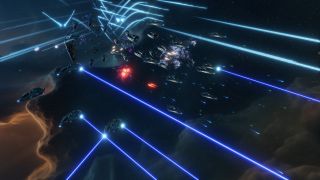
This is great stuff, though Ironclad makes some boasts about how the tracking speed and pitch of turrets is taken into account, and while that sounds cool, this information is not presented in-game and honestly it’s hard to tell what impact it has. All I know is that more point defence = fewer shipwrecks.
Despite the absence of a campaign or discrete objectives, the individual fights and larger wars still spit out their fair share of novelties. A game on a small, resource-scarce map where every agile ship is precious is a uniquely different proposition to one with multiple solar systems, where each faction begins safely nestled away in its own corner, able to slowly expand and build massive armadas before finally saying “howdy” with a wall of warheads. And then human opponents throw in another wrinkle.
Join the fleet
(Image credit: Stardock)
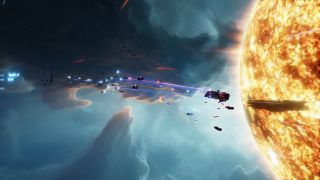
The RTS has been making a comeback over these last few years, but there have been far more stumbles than successes. My time with Sins of a Solar Empire 2, though, has been plain sailing, from the performance—which I never noticed dipping below 70 fps with everything cranked up—to the new features like celestial mechanics. I’d love to see more meat added to the 4X layer, with deeper diplomatic systems and some narrative colour, but when it comes to pure war, nobody does it better.
The Verdict87Read our review policySins of a Solar Empire 2Ironclad’s impressive sequel has made me proud to be a sinner.
The Verdict
The Verdict
87Read our review policySins of a Solar Empire 2Ironclad’s impressive sequel has made me proud to be a sinner.
87Read our review policy
87
Sins of a Solar Empire 2Ironclad’s impressive sequel has made me proud to be a sinner.
Sins of a Solar Empire 2
Ironclad’s impressive sequel has made me proud to be a sinner.
More about sins of a solar empire 2Sins of a Solar Empire 2 makes space exciting again—and it’s a brilliant 4X RTS to bootReal-time strategy almost came back from the brink of death and then fell flat on its faceLatestThe best part of Marvel Rivals Season 1 is Mister Fantastic’s obnoxiously fun chest-bump attack and his ridiculously OP kitSee more latest►
More about sins of a solar empire 2Sins of a Solar Empire 2 makes space exciting again—and it’s a brilliant 4X RTS to bootReal-time strategy almost came back from the brink of death and then fell flat on its faceLatestThe best part of Marvel Rivals Season 1 is Mister Fantastic’s obnoxiously fun chest-bump attack and his ridiculously OP kitSee more latest►
More about sins of a solar empire 2Sins of a Solar Empire 2 makes space exciting again—and it’s a brilliant 4X RTS to bootReal-time strategy almost came back from the brink of death and then fell flat on its face
More about sins of a solar empire 2
Sins of a Solar Empire 2 makes space exciting again—and it’s a brilliant 4X RTS to bootReal-time strategy almost came back from the brink of death and then fell flat on its face

Sins of a Solar Empire 2 makes space exciting again—and it’s a brilliant 4X RTS to boot
Sins of a Solar Empire 2 makes space exciting again—and it’s a brilliant 4X RTS to boot
Real-time strategy almost came back from the brink of death and then fell flat on its face
Real-time strategy almost came back from the brink of death and then fell flat on its face
LatestThe best part of Marvel Rivals Season 1 is Mister Fantastic’s obnoxiously fun chest-bump attack and his ridiculously OP kitSee more latest►
Latest
The best part of Marvel Rivals Season 1 is Mister Fantastic’s obnoxiously fun chest-bump attack and his ridiculously OP kit
The best part of Marvel Rivals Season 1 is Mister Fantastic’s obnoxiously fun chest-bump attack and his ridiculously OP kit
The best part of Marvel Rivals Season 1 is Mister Fantastic’s obnoxiously fun chest-bump attack and his ridiculously OP kit
See more latest►
Most PopularTurtle Beach Stealth Pivot reviewIkea Matchspel gaming chair reviewASRock DeskMini X600 reviewZotac Zbox Magnus EN374070C reviewMinisforum AtomMan G7 Ti reviewSamsung Galaxy Book4 Ultra reviewNoctua NH-D15 G2 reviewGulikit KK3 Max reviewBallionaire reviewMarvel Rivals reviewBe Quiet! Dark Rock 5 review
Most PopularTurtle Beach Stealth Pivot reviewIkea Matchspel gaming chair reviewASRock DeskMini X600 reviewZotac Zbox Magnus EN374070C reviewMinisforum AtomMan G7 Ti reviewSamsung Galaxy Book4 Ultra reviewNoctua NH-D15 G2 reviewGulikit KK3 Max reviewBallionaire reviewMarvel Rivals reviewBe Quiet! Dark Rock 5 review
Most PopularTurtle Beach Stealth Pivot reviewIkea Matchspel gaming chair reviewASRock DeskMini X600 reviewZotac Zbox Magnus EN374070C reviewMinisforum AtomMan G7 Ti reviewSamsung Galaxy Book4 Ultra reviewNoctua NH-D15 G2 reviewGulikit KK3 Max reviewBallionaire reviewMarvel Rivals reviewBe Quiet! Dark Rock 5 review
Most Popular
Turtle Beach Stealth Pivot review
Ikea Matchspel gaming chair review
ASRock DeskMini X600 review
Zotac Zbox Magnus EN374070C review
Minisforum AtomMan G7 Ti review
Samsung Galaxy Book4 Ultra review
Noctua NH-D15 G2 review
Gulikit KK3 Max review
Ballionaire review
Marvel Rivals review
Be Quiet! Dark Rock 5 review
HARDWARE BUYING GUIDESLATEST GAME REVIEWS1Best Steam Deck accessories in Australia for 2025: Our favorite docks, powerbanks and gamepads2Best graphics card for laptops: the mobile GPUs I’d want in my next gaming laptop3Best mini PCs in 2025: The compact computers I love the most4Best 14-inch gaming laptop: The top compact gaming laptops I’ve held in these hands5Best Mini-ITX motherboards in 2025: My pick from all the mini mobo marvels I’ve tested1Thank Goodness You’re Here! review: An anarchic treasure trove of jokes and skits2Shiren the Wanderer: The Mystery Dungeon of Serpentcoil Island review—like juggling chainsaws on horseback3WD Black SN850X 8 TB NVMe SSD review4Ikea Utespelare desk review5Asus ROG Harpe Ace Mini wireless mouse review
HARDWARE BUYING GUIDESLATEST GAME REVIEWS1Best Steam Deck accessories in Australia for 2025: Our favorite docks, powerbanks and gamepads2Best graphics card for laptops: the mobile GPUs I’d want in my next gaming laptop3Best mini PCs in 2025: The compact computers I love the most4Best 14-inch gaming laptop: The top compact gaming laptops I’ve held in these hands5Best Mini-ITX motherboards in 2025: My pick from all the mini mobo marvels I’ve tested1Thank Goodness You’re Here! review: An anarchic treasure trove of jokes and skits2Shiren the Wanderer: The Mystery Dungeon of Serpentcoil Island review—like juggling chainsaws on horseback3WD Black SN850X 8 TB NVMe SSD review4Ikea Utespelare desk review5Asus ROG Harpe Ace Mini wireless mouse review
HARDWARE BUYING GUIDESLATEST GAME REVIEWS1Best Steam Deck accessories in Australia for 2025: Our favorite docks, powerbanks and gamepads2Best graphics card for laptops: the mobile GPUs I’d want in my next gaming laptop3Best mini PCs in 2025: The compact computers I love the most4Best 14-inch gaming laptop: The top compact gaming laptops I’ve held in these hands5Best Mini-ITX motherboards in 2025: My pick from all the mini mobo marvels I’ve tested1Thank Goodness You’re Here! review: An anarchic treasure trove of jokes and skits2Shiren the Wanderer: The Mystery Dungeon of Serpentcoil Island review—like juggling chainsaws on horseback3WD Black SN850X 8 TB NVMe SSD review4Ikea Utespelare desk review5Asus ROG Harpe Ace Mini wireless mouse review
HARDWARE BUYING GUIDESLATEST GAME REVIEWS1Best Steam Deck accessories in Australia for 2025: Our favorite docks, powerbanks and gamepads2Best graphics card for laptops: the mobile GPUs I’d want in my next gaming laptop3Best mini PCs in 2025: The compact computers I love the most4Best 14-inch gaming laptop: The top compact gaming laptops I’ve held in these hands5Best Mini-ITX motherboards in 2025: My pick from all the mini mobo marvels I’ve tested1Thank Goodness You’re Here! review: An anarchic treasure trove of jokes and skits2Shiren the Wanderer: The Mystery Dungeon of Serpentcoil Island review—like juggling chainsaws on horseback3WD Black SN850X 8 TB NVMe SSD review4Ikea Utespelare desk review5Asus ROG Harpe Ace Mini wireless mouse review
HARDWARE BUYING GUIDESLATEST GAME REVIEWS
1Best Steam Deck accessories in Australia for 2025: Our favorite docks, powerbanks and gamepads
1Best Steam Deck accessories in Australia for 2025: Our favorite docks, powerbanks and gamepads
1
Best Steam Deck accessories in Australia for 2025: Our favorite docks, powerbanks and gamepads
2Best graphics card for laptops: the mobile GPUs I’d want in my next gaming laptop
2Best graphics card for laptops: the mobile GPUs I’d want in my next gaming laptop
2
Best graphics card for laptops: the mobile GPUs I’d want in my next gaming laptop
3Best mini PCs in 2025: The compact computers I love the most
3Best mini PCs in 2025: The compact computers I love the most
3
Best mini PCs in 2025: The compact computers I love the most
4Best 14-inch gaming laptop: The top compact gaming laptops I’ve held in these hands
4Best 14-inch gaming laptop: The top compact gaming laptops I’ve held in these hands
4
Best 14-inch gaming laptop: The top compact gaming laptops I’ve held in these hands
5Best Mini-ITX motherboards in 2025: My pick from all the mini mobo marvels I’ve tested
5Best Mini-ITX motherboards in 2025: My pick from all the mini mobo marvels I’ve tested
5
Best Mini-ITX motherboards in 2025: My pick from all the mini mobo marvels I’ve tested
1Thank Goodness You’re Here! review: An anarchic treasure trove of jokes and skits
1Thank Goodness You’re Here! review: An anarchic treasure trove of jokes and skits
1
Thank Goodness You’re Here! review: An anarchic treasure trove of jokes and skits
2Shiren the Wanderer: The Mystery Dungeon of Serpentcoil Island review—like juggling chainsaws on horseback
2Shiren the Wanderer: The Mystery Dungeon of Serpentcoil Island review—like juggling chainsaws on horseback
2
Shiren the Wanderer: The Mystery Dungeon of Serpentcoil Island review—like juggling chainsaws on horseback
3WD Black SN850X 8 TB NVMe SSD review
3WD Black SN850X 8 TB NVMe SSD review
3
WD Black SN850X 8 TB NVMe SSD review
4Ikea Utespelare desk review
4Ikea Utespelare desk review
4
Ikea Utespelare desk review
5Asus ROG Harpe Ace Mini wireless mouse review
5Asus ROG Harpe Ace Mini wireless mouse review
5
Asus ROG Harpe Ace Mini wireless mouse review
